Emerald Cut Salt and Pepper Diamond Rings: The Ultimate Buying Guide
TL;DR: Emerald cut salt & pepper diamonds blend modern minimalism with organic character — this guide walks you through shape anatomy, how to read inclusions, setting choices, pricing factors, step-by-step buying checklist, care & maintenance, and real-life examples so you buy with confidence at FancyDiamondJewels.
Hook — Why emerald cut salt & pepper rings are trending
Emerald cut salt and pepper diamond rings are the quiet rebels of the jewelry world: they offer clean lines and architectural elegance combined with one-of-a-kind internal character — tiny black and white inclusions that create a speckled, cosmopolitan look. Lovers of minimalism, vintage revival, and ethically-minded shoppers are all embracing them as alternative engagement rings or signature fashion pieces.
Why choose an Emerald Cut for a Salt & Pepper Diamond?
Elegant, elongated silhouette: The emerald cut's step facets emphasize clarity and internal patterns — salt & pepper inclusions create striking, window-like textures.
Modern-vintage appeal: Clean geometry that pairs beautifully with sleek bezels or romantic milgrain settings.
Unique personality: No two salt & pepper stones look identical — perfect for buyers who want something singular.
Emerald cuts minimize sparkle in favor of depth and contrast — which means salt & pepper inclusions often read as artful patterns rather than flaws.
Emerald Cut Anatomy & What ‘Salt & Pepper’ Means
Emerald cut basics
Table: Large, open top facet that creates a "hall of mirrors" effect.
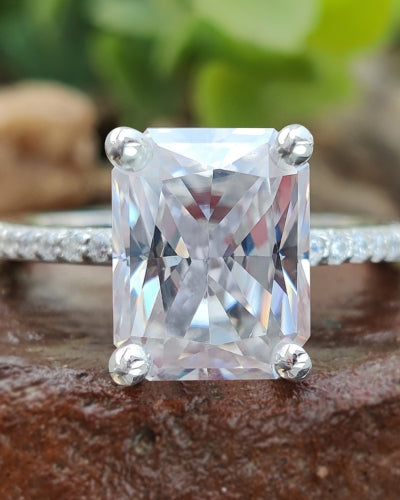
Step facets: Long, parallel facets that emphasize clarity and inclusions.
Length-to-width ratio: Common emerald ratios: 1.30–1.50 (classic to elongated).
What are Salt & Pepper diamonds?
Salt & pepper diamonds contain a mix of dark (carbon/graphite) and white (crystal/mineral) inclusions spread through the stone. The visual effect ranges from subtle speckling to bold marbling — many buyers prize this for its organic, earthy aesthetic.
Style Variations & Popular Settings
Top setting styles for emerald cut salt & pepper diamonds
Bezel setting: Best for everyday durability and a modern look.
Prong setting (4 or 6): Classic, lets the stone breathe and shows more profile.
East-West vs North-South: Mounting an emerald cut sideways (east-west) creates contemporary drama.
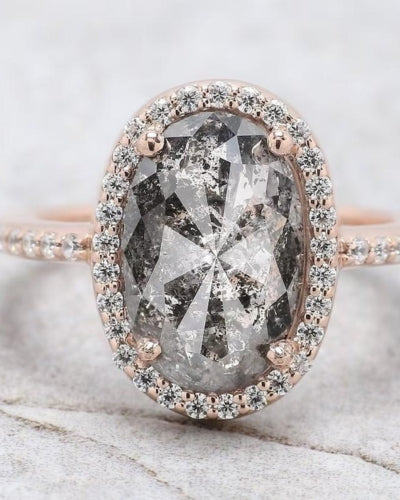
Halo: Micro-halo of tiny melee diamonds can add contrast but may distract from the stone's natural pattern.
Split shank & cathedral: Add architectural interest that pairs well with the emerald cut lines.
Metal choices
14K/18K Yellow Gold: Warm tone that complements grey/black inclusions.
Rose Gold: Romantic, soft contrast.
White Gold / Platinum: Clean, modern and makes the diamond appear cooler in tone.
Emerald Cut Salt and Pepper Diamond Ring - FancyDiamondJewels example (product)
Grading, Measurements & Visual Assessment
How to assess a salt & pepper emerald cut
Photographs: Request high-resolution top, profile and side photos under natural light and controlled studio light.
Video: A short rotating video helps evaluate the distribution of inclusions and overall face-up appearance.
Proportions: Watch for table size and pavilion depth — emerald cuts with too shallow or too deep pavilion can look flat or closed.
Symmetry: Step facets should align — uneven facets can distract from the look.
Measurement table (quick reference)
Attribute
Ideal Range
Notes
Length-to-width
1.30–1.50
1.40 is classic; >1.50 looks elongated
Table
60–70%
Too large table may emphasize inclusions; balance is key
Pavilion depth
40–44%
Maintains depth without looking dark
Polish & Symmetry
Good–Excellent
Prefer better polish for crisp steps
Pricing Factors & Typical Ranges
Salt & pepper diamonds are priced very differently from eye-clean white diamonds. Price drivers:
Carat weight: Larger salt & pepper stones can be more affordable per carat than white diamonds, but prices rise with rarity of pattern and size.
Visual appeal & pattern: Bold, even patterns that read well face-up command a premium.
Cut quality & proportions: Well-cut emerald shapes that retain brightness and show pattern attract higher prices.
Setting and metal: Custom settings, gold purity and handcrafted details add to final cost.
Typical price bands (indicative)
Carat
Typical Price Range (USD)
Notes
0.30–0.69 ct
$150–$600
Small stones good for delicate settings
0.70–1.29 ct
$400–$1,200
Popular engagement ring size
1.30–2.00 ct
$800–$3,000+
Patterns and rarity influence price strongly
2.00+ ct
$1,800–$8,000+
Large, well-patterned salt & pepper stones can be statement pieces
Example verified product pricing sample (for reference): multiple emerald cut salt & pepper options are available from FancyDiamondJewels in a range of sizes and prices.
Step-by-Step Buying Guide (Actionable Checklist)
Before you shop — priorities
Decide your target carat/size and budget.
Pick preferred metal & setting style (bezel for durability, prong for vintage look).
Decide whether you want a certificate, video, and return window.
Shopping steps
Search & shortlist: Use product filters (emerald cut, salt & pepper) and save 3–5 favorites.
Request media: Ask for extra hi-res photos, an overhead face-up image, and a short rotating video.
Compare proportions: Use measurements and the table above to compare face-up size vs carat weight.
Order sample or consult: Many bespoke jewelers offer mockups or CAD previews for custom mounts.
Finalize and insure: After purchase, photograph appraisals and consider insurance or a jewelry rider.
Quick buyer’s checklist (printable)
Preferred L/W ratio: ______
Target carat range: ______
Setting style: ______
Metal & finish: ______
Return policy checked: Yes / No
Video/photos received: Yes / No
Comparison Charts — Emerald Cut Salt & Pepper vs Alternatives
At-a-glance comparison
Feature
Emerald Salt & Pepper
White Emerald
Other Shapes (oval/round salt & pepper)
Visual character
Artful speckling, architectural
Clean, bright
Often more brilliance; different pattern read
Face-up size
Appears larger due to table
Similar
Round reads smaller face-up for carat
Price per carat
Generally lower
Higher
Varies
Durability in setting
Same as diamond; inclusions don't affect hardness but chip risk at extreme inclusions
Same
Same
When to pick emerald vs other shapes
Choose emerald if you want a clean, architectural look that showcases internal patterns.
Choose oval or round salt & pepper if you prefer softer edges and more scintillation.
Care, Cleaning & Longevity
Salt & pepper diamonds have the same hardness as other natural diamonds, but their inclusions can create stress points in rare cases. General care tips:
Clean with warm water, mild soap, and a soft brush — avoid ultrasonic cleaners if stone has large open inclusions near the girdle.
Remove during heavy work or sports that risk impact.
Regularly check prongs and bezel edges for wear; tighten loose settings promptly.
Insure high-value pieces with a jewelry policy or rider.
Case Studies & Real-Customer Examples
Case Study 1 — The Minimalist Bezel
A couple wanted something low-profile and unique: they chose a 0.98 ct emerald cut salt & pepper set in a 14K rose-gold bezel. The bezel protected the girdle and highlighted the stone's marbling. Outcome: daily-wear comfort and a distinct personality.
Case Study 2 — Halo for Contrast
Another customer preferred a halo to boost ring presence. A 1.04 ct emerald cut with even salt & pepper distribution paired with a micro-halo of melee diamonds — the halo framed the pattern and added sparkle without overshadowing the center stone.
Verified similar product choices and settings are offered at FancyDiamondJewels.
Pros & Cons — Quick Buyer Reference
Pros
Unique, one-of-a-kind appearance
Often more affordable than eye-clean white diamonds
Pairs beautifully with modern and vintage settings
Ethical appeal — many sourced responsibly
Cons
Less traditional — may not suit those wanting classic brilliance
Inclusion patterns are subjective — important to view photos/videos
Some resale markets value eye-clean stones higher
Handpicked Emerald Cut Salt & Pepper Rings (Verified Links)
Below are example product pages you can view directly on FancyDiamondJewels (links verified live):
If you want curated assistance, use the FancyDiamondJewels product filters for emerald cut and salt & pepper and send your top picks to the concierge for extra photos or a ring mockup.
Yes — salt & pepper diamonds are natural diamonds with inclusions; they have the same hardness and mineral composition as other natural diamonds.
Will salt & pepper inclusions weaken the diamond?
Usually no. Most inclusions are cosmetic. If there are large open cavities or surface-reaching cleavages, a jeweler may recommend a protective bezel or to avoid extreme impact.
Do emerald cut diamonds hide inclusions better?
Emerald cuts emphasize internal patterning because of the large table and step facets. For salt & pepper stones this is often an advantage — the inclusions become the focal point.
How do I clean my salt & pepper diamond ring?
Clean routinely with warm water, mild soap and a soft brush. Avoid ultrasonic cleaners if the stone has large open inclusions near the girdle.
Can I get a certificate for a salt & pepper diamond?
Yes, many stones can be accompanied by gem lab reports that document weight and measurements; however, standard GIA-style grading for salt & pepper aesthetic is not always applicable — ask the seller for lab details.
Should I choose a bezel or prong setting?
Bezel offers more protection; prongs show more stone profile and are classic. For stones with surface-reaching inclusions, a bezel is safer.
Are salt & pepper diamonds ethical?
Salt & pepper diamonds can be ethically sourced; always request origin and sourcing policies from the seller.
How long does resizing usually take?
Resizing depends on the supplier. Many jewelers (including bespoke retailers) offer resizing services — check shipping/resizing timelines before purchase.
Do salt & pepper diamonds scratch easily?
No — diamonds score 10 on the Mohs scale. Surface inclusions don't make them softer; however, care is needed to avoid sharp impacts.
Can I trade or resell a salt & pepper diamond?
Resale markets exist but value depends on demand and aesthetic appeal. Unique patterns attract collectors and lovers of alternative diamonds.
Final Tips & Next Steps
Always request extra photos and a short video — salt & pepper look is very much about how the stone reads face-up.
Compare a few stones in similar carat ranges to understand how inclusions affect visual size and presence.
Consider a bezel if you're ordering for everyday wear or a dynamic lifestyle.
Curious about specific options? View the verified emerald-cut salt & pepper product pages and reach out to FancyDiamondJewels for personalized photos, sizing, and custom designs.



Leave a comment
This site is protected by hCaptcha and the hCaptcha Privacy Policy and Terms of Service apply.