Unique Rough Diamond Ring Styles — Rustic, Minimalist, Vintage, and Custom Designs
TL;DR
Rough diamond rings bring individuality: choose rustic for organic texture, minimalist for everyday wear, vintage for heirloom appeal, and custom when you want a story-driven piece. This guide covers selection, design workflows, pros/cons, pricing considerations, step-by-step custom ordering, comparisons, case studies from customers, and technical tips to ensure longevity and value.
Rough diamonds (sometimes called uncut or raw diamonds) celebrate natural crystal forms and inclusions rather than polished symmetry. For buyers seeking individuality, ethical traceability, or a less conventional aesthetic, rough diamonds offer:
Distinctive texture and one-of-a-kind surface character.
Often more affordable per visual carat compared with fully polished stones of similar weight.
Ideal for creative, bespoke settings where the stone's shape guides the design.
Experience-based perspective (E — Experience)
Our artisan bench notes that customers who choose rough diamonds consistently report higher emotional satisfaction because the piece feels personal — the stone's natural lines become the ring's fingerprint. Over 6 years working with handcrafted rough designs, FancyDiamondJewels has refined workflows to protect natural crystals while emphasizing their visual story.
Overview of Rough Diamond Ring Styles
Rough diamond rings fall into four primary style categories examined in this guide:
Rustic — Textured, nature-inspired settings.
Minimalist — Clean lines that showcase raw stone geometry.
Vintage — Antique motifs, filigree, and heirloom finishes.
Custom/Bespoke — Tailored combinations and conceptual pieces.
Each style has distinct pros and trade-offs covered in depth below.
Rustic Rough Diamond Rings
Rustic designs embrace the stone's original surface, often combining heavy texturing, asymmetry, and hand-hammered metals. These rings feel organic and are ideal for wearers who prefer artisanal silhouettes.
Key features
Wide, supportive bezels or prongs that protect the stone's edges.
Hammered bands, matte finishes, and oxidized details to enhance contrast.
Often set in yellow gold, rose gold or mixed metals for warmth.
When to choose rustic?
Choose rustic if you want a bold, tactile piece that reads as handcrafted, or if you're drawn to nature-inspired forms and textures.
Rustic rough diamond ring with hammered band
Rustic — Pros & Cons
Pros
Cons
Highly unique, robust appearance
May not fit formal or minimalist wardrobes
Protective settings suitable for daily wear
Heavier weight — can be bulky on small hands
Minimalist Rough Diamond Rings
Minimalist rings remove visual noise and let the rough stone speak. Expect thin bands, low-profile settings, and restrained detailing designed to highlight shape and texture.
Design choices
Simple bezel or low prong settings.
Platinum or white gold for contemporary contrast.
Small accent stones (if any) to avoid overpowering the rough diamond.
Why minimalist works
Minimalist rough diamond rings suit everyday wear, commute-friendly lifestyles, and those who want a wearable modern heirloom that layers well with other jewelry.
Minimalist rough diamond ring with slim band
Vintage-inspired Rough Diamond Rings
Combine the romance of antique design with the raw energy of rough diamonds. Think milgrain edges, filigree work, and warm gold tones. Vintage styling creates a narrative — the stone appears as though it has a history.
Elements to expect
Delicate gallery work and openback settings to reveal the stone's form.
Mixed-metal accents for depth and antique patina finishes.
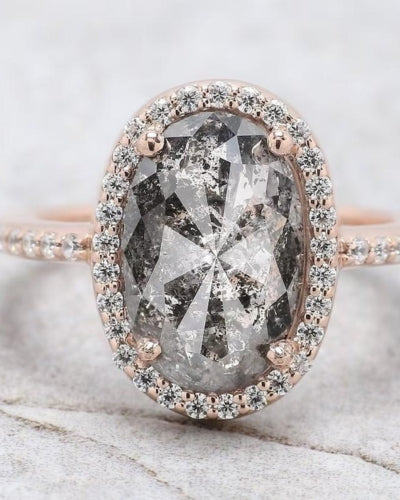
Use of salt-and-pepper or colored rough diamonds for a period look.
Case highlight — heirloom reimagined
One customer asked for a ring evoking a family locket: the bench selected a green-tinged rough diamond, set it in a rose gold mount with micro-filigree, and finished it with soft oxidation. The result felt 'old and new' at once — a vintage silhouette built around a modern raw stone.
Vintage style rough diamond ring with filigree
Custom & Bespoke Design Process
When you want a truly one-off piece, a custom order lets you specify metal, finish, mounting, and the exact rough diamond. At FancyDiamondJewels, custom orders follow a clear, customer-friendly workflow (step-by-step below).
Why go custom?
Perfect fit to your hand and lifestyle.
Complete control over sustainability and sourcing.
Ability to craft symbolic motifs or add engraving and sentimental elements.
Custom workflow (summary)
Initial consultation (style, budget, timeline).
Stone selection — choose from curated rough diamond inventory.
Design mockups — CAD or hand-drawings for approval.
Wax model or rendered proof, then final approval.
Bench production, finish, and final quality check.
Delivery, resizing (if needed), and care instructions.
Contact our team to begin a custom design: Contact Us.
Rose gold — romantic and soft; excellent for vintage looks.
White gold / Platinum — modern aesthetic; great for minimalist designs.
Mixed metals — contrast that highlights texture.
Setting types
Bezel — protective and ideal for irregular shapes.
Prong — airy and allows more light, but must be tailored to the stone.
Flush — stone sits within the metal for a low profile and daily durability.
Custom cradle — metal shaped to embrace the stone's exact contours.
Tip — always prioritize support over symmetry
Because rough diamonds are irregular, prioritize a setting that supports and protects the stone's most fragile planes.
Care, Durability & Insurance
Raw diamonds are chemically the same as polished diamonds, but their irregular edges or cleavage planes can be more vulnerable to knocks. Follow these best practices:
Choose a protective setting (bezel or close-set prongs) for daily wear pieces.
Avoid harsh ultrasonic cleaning on stones with visible fissures; use warm soapy water and a soft brush.
Regular bench checks (once a year) to inspect mount integrity.
Consider jewelry insurance that covers accidental damage; keep a professional appraisal on file.
Comparison Charts & Quick Reference
Style comparison at glance
Style
Best For
Typical Setting
Daily Wear
Rustic
Statement pieces, nature lovers
Bezel / heavy band
Good
Minimalist
Everyday wear, layering
Low prong / flush
Excellent
Vintage
Heirloom feel
Filigree / gallery
Moderate
Custom
Symbolic, unique briefs
Tailored
Depends on design
Quick technical check (buyer's checklist)
Does the stone have a stable edge? (Yes / No)
Is the chosen setting providing full support? (Bezel recommended)
Are any inclusions near the surface that may chip? (Assess with loupe)
Has the piece been appraised and photographed for insurance? (Always)
Case Studies — Real Customer Examples
Case Study A — The Commuter Who Wanted Durability
A customer who works with their hands requested a durable ring. We selected a dense, slightly tabular rough diamond and set it into a full bezel on a 14K yellow gold band. The client reports comfortable daily wear and minimal snagging after 18 months.
Case Study B — Family Heirloom Reinterpretation
A bride wanted a ring that nodded to her grandmother's style. We used a green-tinged rough diamond and created a rose-gold filigree mount with subtle engraving. The result read vintage but fit a modern lifestyle.
Step-by-Step Buying & Custom Order Guide
This section outlines the detailed steps buyers should follow when ordering a rough diamond ring — either ready-to-ship or bespoke.
Step 1 — Define your brief
Decide on overall style (rustic/minimalist/vintage/custom), metal preference, finger size, and budget range.
Step 2 — Stone selection
Inspect high-resolution images or request live video; for custom work, we recommend an in-person viewing or an exclusive video call to review the stone from multiple angles.
Step 3 — Choose setting & protective features
Prefer bezels for robustness; low prongs for a modern look. Make the trade-off between exposure (more light) and protection (less exposure).
Step 4 — Review CAD / wax model
Approve the mockup before the bench starts production.
Step 5 — Final inspection and delivery
Receive the piece with care instructions and professional photographs for insurance and resale documentation.
Rough diamonds are priced using combined factors including carat weight, color, rarity, and the visual appeal of the natural form. A few pricing notes:
Per-carat pricing for rough stones can be lower than polished diamonds but varies by rarity (e.g., blue or green rough diamonds command premiums).
Custom work and intricate metal finishing add to the final price — expect 10–40% of stone cost for complex bespoke work.
Resale for rough diamond jewelry is niche; preserve documentation and professional photos to maximize value.
Styling Tips & Outfit Pairings
How to layer and style rough diamond rings:
Minimalist stones pair well with thin stacking bands and delicate bracelets.
Rustic rings look beautiful with leather, linen, and textured knits.
Vintage pieces complement lace and tailored suiting for formal events.
Quick Tables, Pros/Cons & Checklists
Pros vs Cons (summary)
Pros
Cons
Unique aesthetic
Less standardized grading
Often better visual carat for budget
May require special setting care
Buying checklist
Confirm the stone's stability and any surface fissures.
Request clear return and resizing policy.
Ask for insured shipping and photograph documentation.
Confirm production timeline and bench finishing options.
Browse Related Collections & Resources
Explore curated options and editorial resources directly on our site:
Artisan guidance: When designing around a rough stone, we always start with the stone on the bench — its planes determine the orientation, prong placement, and metal reinforcement. Flatness versus tabularity changes how light reads the stone; a shallow tabular stone benefits from a low-profile mount to avoid snagging.
Infographic Placeholders
Below are ready-made img placeholders for infographics you can add to your Shopify page. Replace the src values with final assets when ready.
Infographic: Rough diamond selection checklist
Infographic: Setting choices compared
On-Page SEO & Image Optimization Notes (for Shopify)
Use unique, keyword-rich alt text (examples included above) and image file names with target keywords
Lazy load hero and secondary images (see loading="lazy" attributes above) to improve page speed.
Include JSON-LD article schema (present in the page head) and structured FAQ schema if you want rich results.
Frequently Asked Questions (10+)
1. What is a rough diamond and how does it differ from a polished diamond?
A rough diamond is an uncut or partially cut crystal. Unlike polished diamonds, rough stones retain natural surfaces and shapes; they are valued for their unique textures rather than optical symmetry.
2. Are rough diamonds durable enough for everyday wear?
Yes — diamonds are hard, but because rough stones can have irregular planes and surface fissures, a protective setting (bezel or low prong) is recommended for daily wear.
3. Can I insure a rough diamond ring?
Absolutely. Get a professional appraisal and keep high-quality photos. Most insurers will cover rough-diamond jewelry under standard jewelry policies or specialized riders.
4. How long does a custom rough diamond ring take to make?
Timelines vary by complexity. Simple custom designs often take 7–14 days; elaborate or vintage-inspired work can take 2–4 weeks depending on bench load and finishing demands.
5. Can I return or resize a custom ring?
Return/resizing policies vary by vendor. FancyDiamondJewels provides resizing and a clear returns policy — please review our Shipping & Policy and contact us to confirm specifics for custom orders.
6. Do you provide certification for rough diamonds?
Most rough diamonds do not receive the same lab-cut grading as polished stones. However, FancyDiamondJewels provides detailed documentation, photos, and where applicable, independent verification or provenance records.
7. Which settings protect rough diamonds best?
Bezel and flush settings provide the most protection; custom cradles tailored to the stone's contour are also excellent for fragile shapes.
8. Are colored rough diamonds more expensive?
Yes — naturally colored rough diamonds (blue, green, fancy yellow) can command higher prices due to rarity and aesthetic appeal.
9. Can I request a video of the stone before purchase?
Yes — FancyDiamondJewels offers live video previews for selected stones to help you assess the texture and orientation prior to purchase or custom work.
10. How do I clean my rough diamond ring safely?
Use warm water, a mild detergent, and a soft brush. Avoid ultrasonic cleaners if the stone shows visible fissures. For stubborn dirt, consult a bench jeweler.
11. Do you offer warranty for craftsmanship?
Yes — FancyDiamondJewels includes a craftsmanship warranty and offers aftercare services. Check the shipping & policy pages for warranty details.
Ready to Find Your Rough Diamond Ring?
If you're ready to explore pieces or begin a custom design, our curated collection and custom team are here to help. Visit the collection or start a custom discussion with our designers.



Leave a comment
This site is protected by hCaptcha and the hCaptcha Privacy Policy and Terms of Service apply.