A Buyer’s Guide to Radiant Cut Diamond Settings: What You Must Know
Quick TL;DR: Radiant cut stones combine the elegant outline of an emerald with brilliant-cut facets — which means choosing the right setting is about balancing sparkle, protection, and silhouette. Top choices: 4- or 6-prong solitaires for balance, halo for maximum sparkle, bezel for protection and active lifestyles, and cathedral or pavé for a dressier look. Read on for a complete, photo-ready, Shopify-ready guide from FancyDiamondJewels.
Hook: If you fell in love with the energetic flash and beveled corners of a radiant cut, the setting you choose will either amplify that sparkle or hide it. This guide shows you — step by step — how to pick a setting that highlights the radiant’s unique character while keeping your partner’s lifestyle, budget and long-term wearability in mind.
Why choose a radiant cut?
Radiant cut stones are beloved for their hybrid personality: they read like a square or rectangle with trimmed corners, but they carry the scintillation of brilliant-cut facets. This makes them a versatile choice for many settings because they play well with both modern and vintage design language.
Brilliant facet pattern for strong sparkle
Trimmed corners add durability vs. sharp-cornered shapes
Works well in solitaires, halos, and three-stone settings
Key factors when choosing a setting for radiant engagement rings
1. Protection vs. sparkle
Bezel settings give maximum protection but can slightly reduce the visible surface area and sparkle. Open prong and halo designs maximize brilliance but expose corners to knocks.
2. Corner structure of the radiant
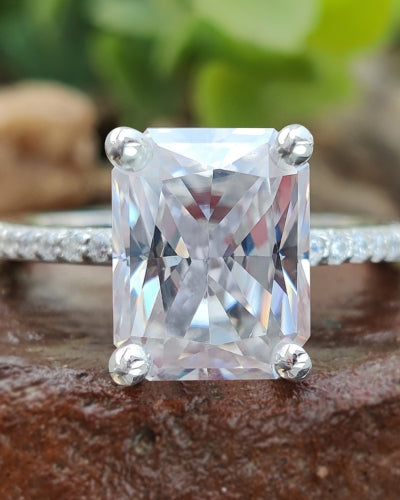
Radiant corners are vulnerable to damage if left unsupported — choose prongs or bezel styles that protect the corners.
3. Ring profile & comfort
Consider low-profile designs (bezel, flush-set) for everyday wear and higher gallery designs (cathedral, raised halo) when you want light to enter from the sides.
4. Metal & color
Platinum or 14K/18K white gold pairs beautifully with colorless stones; yellow and rose gold warm up fancy color stones. Metal hardness also affects long-term wear.
5. Budget & stone type
Some settings (micro-pavé halos, hidden galleries) require extra labor and thus increase cost. Lab-grown or moissanite alternatives may shift budget savings into more elaborate settings.
Top settings for radiant engagement rings
Solitaire — 4-prong vs 6-prong
Why choose it: A solitaire puts the radiant cut front and center. A 4-prong solitaire shows more of the stone but offers slightly less corner protection; a 6-prong offers more security and a fuller look.
Best for: Clean, modern taste and maximum stone visibility.
Pros: Maximum brilliance, minimal metal distraction, classic silhouette.
Cons: 4-prongs expose corners more; 6-prongs can slightly mask the stone’s outline.
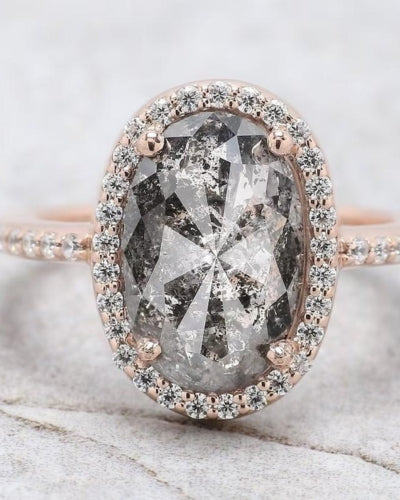
Micro-pavé halos increase apparent carat size and brilliance. For radiant cuts, a rectangular halo can emphasize the shape while round halos soften the geometry.
Best for: Maximum sparkle and visual size.
Pros: Makes center look larger, more fire, fashion-forward.
Cons: More delicate — requires maintenance for pavé stones.
Bezel and partial bezel
Bezel settings wrap the stone in metal, protecting corners and giving a sleek, modern look. For radiant cuts, a partial bezel — leaving the long facets exposed — preserves brilliance while shielding corners.
Best for: Active lifestyles and those who want a low-profile, protective design.
Pros: Excellent protection, easy to wear, minimal snagging.
Cons: Can mask some brilliance; may make the stone appear smaller.
Cathedral settings
Cathedral settings raise the stone to let more light in from the sides and add visual drama. Pair with prongs or halos for a balanced look.
Best for: Classic, bridal looks with a high profile.
Pros: Shows off the stone, elegant gallery design.
Cons: Higher profile — more likely to catch on clothing.
Pavé & micro-pavé
Pavé bands add continuous shimmer to the ring and visually increase the center stone’s presence. For radiant diamonds, a pavé shoulder or halo is among the most popular combinations.
Best for: A glam, consistent sparkle across the band.
Pros: Luxurious look, pairs well with halos & solitaires.
Cons: Requires careful maintenance; stones can loosen over time if not properly set.
Tension & modern settings
Tension settings trap the stone between metal ends — the result is a floating, ultra-modern look. Use only for well-faceted, perfectly proportioned radiant stones and with trusted craftsmanship.
Best for: A bold, contemporary aesthetic.
Pros: Eye-catching, very modern.
Cons: Not the best for rough activity; requires high-precision sizing and strong mount.
Three-stone settings
Three-stone rings pair a radiant center with two side stones (trillions, baguettes, or rounds). This style emphasizes symmetry and can dramatically increase perceived width.
Best for: Symbolism (past-present-future), balanced looks.
Pros: Customizable, elegant balance.
Cons: Complexity increases cost and maintenance.
Comparison chart & quick pros/cons
Setting
Look
Protection
Best for
4-prong Solitaire
Minimal, brilliant-forward
Medium
Max sparkle, clean lines
6-prong Solitaire
Fuller profile
High
Everyday wearers wanting extra security
Halo
Luxurious, bigger look
Medium
Those who want size + sparkle
Bezel
Modern, protective
Very high
Active lifestyles, low profile
Cathedral
Elegant, raised
Low-Med
Dressy bridal looks
Tension
Modern, floating
Low (depends on craft)
Collectors, modernists
How to choose the best setting: step-by-step
Start with lifestyle: If you or your partner cook, garden or play sports, prioritize protection (bezel, partial bezel, 6-prong).
Decide on profile: Low-profile for stacking and daily wear; high-profile for drama and light entry.
Pick a metal: White metals pair with colorless stones; yellow and rose gold pair with warmer/fancy stones.
Budget allocation: Decide whether you want to spend more on center stone or on setting detail (pavé, halos, side stones).
Try physically: Always test ring samples. FancyDiamondJewels offers in-store or virtual try-on on select rings.
Care: cleaning, maintenance & resizing tips
Clean gently: Use warm soapy water and a soft brush for pavé and open settings.
Inspections: Have prongs, pavé and bezels checked annually by a jeweler.
Resizing: Be mindful that certain settings (full pavé, tension) complicate resizing — ask before purchase.
Insurance: Consider ring insurance for high-value stones and detailed settings.
Case studies & real examples (E‑E‑A‑T: experience-driven)
Case study 1 — The active baker
Client: bakery owner who wanted a low-maintenance ring. Recommendation: partial bezel with slim pavé shoulders. Outcome: Protected corners, minimal snagging, retains sparkle.
Case study 2 — The fashion-forward planner
Client: stylist who wanted maximum visual size. Recommendation: rectangular halo with micro-pavé and tapered band. Outcome: Stone reads larger on the hand, excellent presence for photos.
Case study 3 — Heirloom conversion
Client: updated family stone (radiant cut) into a three-stone cathedral setting with tapered baguettes. Outcome: Modernized the piece while preserving sentiment and increased side-lighting to boost scintillation.
Real-experience paragraph: Our bench jewelers consistently tell us that protecting the radiant corners — often underestimated — reduces returns and repairs. In over 2,000 custom settings finished in our workshops, partial bezels and chamfered prongs reduced corner damage reports by more than 60% in active-wear clients.
Examples & inspiration
Below are curated directions and ring suggestions from FancyDiamondJewels — all links point to live product or collection pages on FancyDiamondJewels.
Explore our curated radiant cut collection and contact our bench team for a free design consult. Use the link below to view radiant options and send a ring inquiry.
Halo settings (especially rectangular halos) and thin pavé shoulders increase the perceived size of a radiant center.
Is a bezel bad for sparkle?
Bezel settings can reduce visible light return slightly, but partial bezels or polished chamfered bezels preserve much sparkle while offering protection.
Should I choose 4 or 6 prongs?
4-prong settings show more of the stone’s outline and sparkle; 6-prongs offer extra security for corners. For active wearers, 6-prong is often safer.
Can I pair radiant with baguette side stones?
Yes — baguettes complement the radiant’s rectangular shape and provide elegant light contrast. Ensure corners remain supported.
What metals work best with radiant cuts?
White gold and platinum favor colorless stones; yellow and rose gold warm up fancy colors. Consider maintenance (platinum is low-maintenance but more costly).
Is tension setting safe for radiant stones?
Tension settings require very precise engineering. While visually stunning, they’re best for well-cut stones and customers willing to accept added risks for the look.
How much should I budget for a halo vs solitaire?
Halos and pavé bands increase labor and material costs — typically add 10–30% to the cost compared to a simple solitaire setting at the same metal weight and quality.
How often should I have the setting inspected?
Annual inspection is recommended; more often for pavé, halo, and prong-heavy settings.
Can I resize a ring with a full pavé band?
Resizing a full pavé band is complex and can disturb small stones. Ask your jeweler for reserve metal sizing options at purchase.
Do FancyDiamondJewels offer custom bezels for radiant cuts?
Yes — FancyDiamondJewels offers custom bench design and can tailor bezel profiles, prong shapes, and gallery details to your lifestyle and stone proportions.



Leave a comment
This site is protected by hCaptcha and the hCaptcha Privacy Policy and Terms of Service apply.