
Jewelry Fundamentals & Gemstone Guide for Rings — The Complete, Practical Handbook
TL;DR: This exhaustive guide walks you through the essential fundamentals of ring jewelry — metals, gemstones, cuts, settings, ring construction, buying strategies, care & repair, and real-world examples. Use this as a buyer’s checklist, designer reference, and care manual for rings of every style and budget.
Hook: Whether you’re buying an engagement ring, designing a custom heirloom, or learning gemstone science for the first time — this single-page guide gives you clear, step-by-step help to make confident, beautiful decisions.
Table of Contents
- Introduction & Why Fundamentals Matter
- Metals & Alloys for Rings
- Gemstone Basics: Types & Properties
- Diamond Fundamentals
- Cuts, Polishing & Light Return
- Ring Settings Explained
- Design Principles & Proportions
- Sizing, Fit & Comfort
- Buying Guide — Step-by-step
- Care, Cleaning & Maintenance
- Quick Comparison Charts
- Case Studies & Examples
- E-E-A-T: Real Experience Notes
- Infographics & Visuals
- Calls to Action & Next Steps
- FAQs
1. Introduction & Why Jewelry Fundamentals Matter
Understanding the fundamentals — from metal durability to gemstone hardness and setting geometry — saves money, prevents surprises, and yields rings that stand the test of time. This section explains the big picture in plain language and prepares you for technical details later.
Who should read this?
- Engagement ring buyers and brides/grooms
- Custom ring designers and bench jewelers
- Collectors and gift shoppers
- Anyone who wants to care for a ring properly
2. Metals & Alloys for Rings
Overview of common metals
- Gold — available in 24K, 22K, 18K, 14K. Higher karat = more pure gold but softer.
- Platinum — dense, durable, hypoallergenic; premium choice for engagement settings.
- Silver — affordable, bright white, but soft and prone to tarnish.
- Palladium — lighter than platinum and hypoallergenic.
- Alloys / alternative metals — titanium, stainless steel, tungsten (less common for fine rings).
Practical guide: Choosing a metal
- Start with budget and lifestyle: active daily wear favors tougher metals like platinum or 18K gold.
- Consider color: yellow, rose, or white gold vs platinum — skin tone and matching wedding band matter.
- Allergies: choose platinum or palladium if you have nickel sensitivity.
Metals quick reference table
| Metal | Durability (1–5) | Typical Uses | Care Notes |
|---|---|---|---|
| Platinum | 5 | Engagement settings, prongs | Polishes well; develops patina |
| 18K Gold | 4 | Luxury rings, colored gold | Softer than 14K; check alloy |
| 14K Gold | 4 | Everyday wear | Great balance of durability/cost |
| Silver | 2 | Fashion rings | Tarnishes; needs polish |
3. Gemstone Basics: Types & Properties
Key properties to know (the quick checklist)
- Hardness — Mohs scale (scratch resistance).
- Toughness — resistance to breaking, cleavage.
- Density / Specific gravity — affects weight and feel.
- Refractive index (RI) — controls brilliance and sparkle.
- Color, clarity, cut — aesthetic factors and value drivers.
Hardness & what it means for rings
Rings are exposed to knocks and abrasion. Harder stones (diamond, sapphire, ruby) are better for daily wear. Softer stones (opal, turquoise, pearl) require protective settings or occasional wear only.
Common gemstone types used in rings
- Diamonds — unmatched hardness and brilliance.
- Sapphires & Rubies (corundum family) — hard and colorful.
- Emeralds — alluring green but often included (fragile).
- Moissanite — lab-grown alternative with high brilliance.
- Gemstones to treat with care: opal, pearl, amber, turquoise.
4. Diamond Fundamentals (Cut, Color, Clarity, Carat)
The 4Cs explained
- Cut — most important for sparkle (proportions, symmetry, polish).
- Color — scale from D (colorless) to Z (light yellow/brown).
- Clarity — internal inclusions and blemishes scale from IF to I3.
- Carat — weight, not size; carat affects price exponentially.
How to prioritize the 4Cs
For many buyers: cut > clarity > color > carat. A well-cut slightly-smaller diamond often outshines a poorly cut larger one.
5. Cuts, Polishing & Light Return
Cut shapes often chosen for rings
- Round brilliant — best for maximizing fire & brilliance.
- Princess — square with good sparkle.
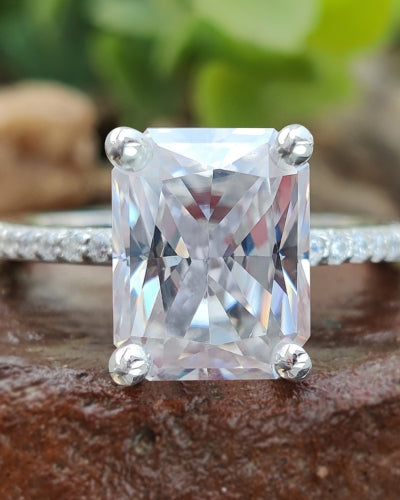
- Oval, Pear, Marquise — elongating shapes, require balanced proportions.
- Emerald & Asscher — step cuts emphasize clarity over brilliance.
Cutting & light physics
Cut affects how light enters and returns — this is the essence of "brilliance." Precision of facet angles matters more than shape name.
6. Ring Settings Explained (Prong, Bezel, Channel, Halo, Tension)
Common settings and when to use them
- Prong — classic, shows most of the stone; good for diamonds.
- Bezel — full metal rim; excellent for protecting soft stones.
- Channel — stones set between rails; ideal for eternity bands.
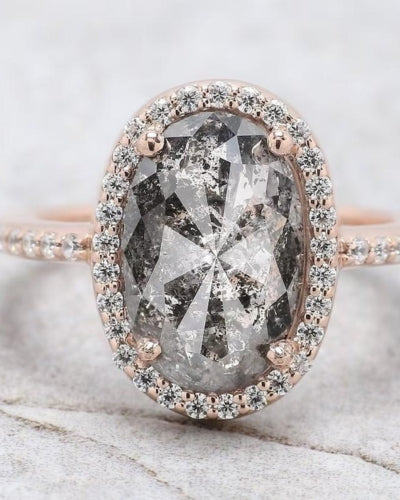
- Halo — smaller stones around a center stone add apparent size.
- Tension — modern look; holds stone by pressure (works for durable stones).
Step-by-step: How to choose a setting
- Decide daily-wear vs occasional-wear.
- Match stone hardness to setting protection (bezel for opal, prong for diamond).
- Consider cleaning and repair — channel and bezel settings are harder to clean but safer.
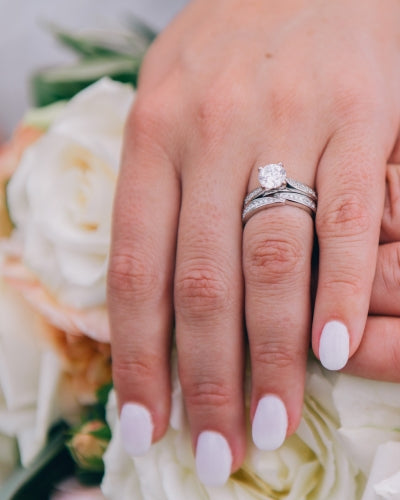
- Think about ring stacking & wedding band pairing.
7. Design Principles & Proportions for Rings
Balance, scale and finger proportion
Large stones suit longer fingers; smaller stones are elegant on shorter fingers. Band width should harmonize with center stone size to maintain balance.
Proportions checklist for designers
- Center stone diameter vs band width ratio
- Prong height for easy cleaning vs security
- Shoulder taper and side stone scaling
8. Sizing, Fit & Comfort
How to size a ring accurately
Use an accurate mandrel or the free ring-size finder tools available from many jewelers. Sizing based on season (fingers swell in summer); prefer to size for the fit when worn.
Comfort-fit vs standard-fit
Comfort-fit rings have a rounded interior and feel slightly looser; great for wider bands.
9. Buying Guide — Step-by-step (Checklist)
Step 1 — Decide priorities
List top 3 priorities: brilliance, durability, budget, ethical sourcing, custom design.
Step 2 — Compare settings and metals
Choose a metal first (platinum vs 18K/14K gold) and a setting type that fits your lifestyle.
Step 3 — Choose gemstone type
Diamonds for hardness and tradition; sapphires/rubies for color and toughness; moissanite for budget-friendly brilliance.
Step 4 — Get documentation & warranties
Ask for grading reports (for diamonds) and warranty/resize policy. Verify return policy and repair services.
Verified shop examples: Explore Collections Lab-Grown Engagement Rings
10. Care, Cleaning & Maintenance
Daily care checklist
- Remove rings when heavy-lifting, gardening, or applying chemicals.
- Store rings separately to avoid abrasion.
- Inspect prongs and settings every 6–12 months.
How to clean at home (safe method)
- Soak in warm water with mild dish soap for 10–15 minutes.
- Use a soft toothbrush to gently clean underneath the stone.
- Rinse thoroughly and pat dry with a lint-free cloth.
When to send to a jeweler
- Loose stones or damaged prongs.
- Deep scratches on metal requiring polishing or re-tipping.
- Complex repairs such as resetting or ring resizing beyond 1–2 sizes.
11. Quick Comparison Charts
Hardness & suitability for everyday rings
| Gemstone | Mohs Hardness | Everyday Wear? |
|---|---|---|
| Diamond | 10 | Yes |
| Sapphire / Ruby | 9 | Yes |
| Emerald | 7.5–8 (often included) | Conditional (protective setting) |
| Opal | 5–6.5 | No (avoid daily wear) |
Costs: Relative price bands
- High: Natural diamonds (fine color/clarity), high-quality emeralds
- Middle: Sapphires, rubies (depending on origin/quality), lab-grown diamonds
- Budget-friendly: Moissanite, lower-grade colored gemstones, sterling silver settings
12. Case Studies & Examples
Case Study A — Everyday engagement ring for an active lifestyle
Requirements: maximum durability, low maintenance, classic look. Solution: 3/4 bezel or robust 4-prong setting in platinum with a round brilliant diamond ~0.75–1.2 ct. Result: excellent daily wear with low risk of snagging.
Case Study B — Vintage-inspired emerald ring
Requirements: vintage look, deep green color; accept fragility. Solution: emerald center in bezel set with halo and protective shoulders; use platinum or 18K gold to minimize wear. Result: beautiful heirloom with recommended occasional wear policy.
13. E-E-A-T — Real-Experience Notes & Practitioner Tips
From the bench: what jewelers wish buyers knew
Experience note: Jewelers often see buyers focused solely on carat. Instead, inspect cut quality and setting integrity. A slightly smaller, well-cut diamond in a sturdy setting will last decades longer with fewer repairs.
From the buyer: practical experience
Experience note: Buyers who insure their rings at purchase and schedule annual checks report fewer long-term surprises and lower lifetime repair costs.
14. Infographics & Visual Placeholders
Infographic showing the 4Cs of diamonds: cut, color, clarity, carat

Infographic comparing prong, bezel, channel, halo and tension settings for rings

15. Calls to Action & Next Steps
Ready to explore real rings or request a custom design? Start with these verified pages:
16. Extra Tools, Checklists & Printables
Printable buying checklist (compact)
- Budget: ______
- Preferred metal: ______
- Preferred stone: ______
- Daily wear? Yes / No
- Insured? Yes / No
Quick repair checklist for jewelers
- Reseat loose stones
- Retip worn prongs
- Resize with minimal structural change
17. FAQs — 10+ Common Questions (Schema-ready)
How do I choose between platinum and white gold?
Platinum is denser and more durable but pricier; white gold is lighter, less expensive, and often rhodium-plated for color. For very active daily wear, platinum is often recommended.
Are lab-grown diamonds real diamonds?
Yes — lab-grown diamonds have the same chemical and optical properties as mined diamonds. They often cost less per carat and are ethically appealing to some buyers.
Which gemstones are safe for everyday rings?
Diamonds and corundum (sapphire, ruby) are best for everyday wear due to high hardness (9–10 on Mohs). Stones below Mohs 7 should be treated with care.
How often should I have my ring inspected?
Every 6–12 months is a common recommendation for prong checks, especially if the ring is worn daily.
Can I resize a ring up or down?
Most rings can be resized up or down 1–2 sizes without issue. Some settings and eternity bands are difficult or impossible to resize without redesign.
What is a good budget allocation for an engagement ring?
Budgets vary; a practical approach is to set a percentage of annual income you are comfortable spending, but prioritize cut and setting over maximizing carat if longevity matters.
How do I clean a ring with multiple gemstones?
Use the mild-soak-and-soft-brush method and avoid ultrasonic cleaners for stones like emeralds, opals, or treated gems. When in doubt, consult your jeweler.
Should I buy diamonds with grading reports?
For diamonds above approximate 0.30–0.50 ct, a grading report (GIA, IGI, etc.) adds transparency and resale assurance. For smaller or lower-budget stones, ask for clarity on grading standards used.
What setting minimizes risk of stone loss?
Bezel settings and low-profile prongs are excellent for reducing the risk of knocks and stone loss. Tension settings require expert craftsmanship and are best for hard stones.
How do I insure my ring?
Insurance options include adding a jewelry rider to your homeowner policy or using specialized jewelry insurance. Keep receipts, photos, and documentation of appraisals for claims.
18. Pros & Cons Summaries
Platinum
- Pros: durable, hypoallergenic, prestigious
- Cons: heavier, more expensive, develops patina
Lab-grown diamond
- Pros: cost-effective, eco-friendly options, identical properties to mined diamonds
- Cons: resale market can vary, buyer preference still split
19. Quick Maintenance & Buying Checklists
Before purchase
- Ask about return/resizing policy
- Request any available grading reports
- Confirm metal hallmarks and warranty terms
After purchase
- Register the purchase and photograph the ring
- Store certificate and receipts safely
- Schedule annual inspection
20. Visual Gallery (Placeholders)
Curate your product gallery on Shopify using high-resolution WebP images for speed. Below are placeholders linking to verified product resources for inspiration:
Lab-grown diamond halo ring example

21. Final Checklist Before Purchase
- Confirm metal & setting compatibility with gemstone hardness.
- Verify return/resizing policy, warranty and appraisals.
- Check for insurance options and documentation.
22. Closing Notes & Contact
This guide was created to be a practical, evergreen handbook you can return to while shopping or designing rings. For live product browsing and current collections, please check the verified pages below:
Contact FancyDiamondJewels — Request Custom Design


Leave a comment
This site is protected by hCaptcha and the hCaptcha Privacy Policy and Terms of Service apply.