Kite Bezel Ring vs Kite Halo Ring: What’s the Difference?
Quick TL;DR:
Bezel: sleek metal rim wraps the kite-cut stone — ultra-secure, modern, low-profile, great for everyday wear.
Halo: accent stones surround the kite-cut center — maximized sparkle and perceived size, more maintenance, more brilliance.
Choosing depends on your priorities: durability & minimalism (bezel) vs maximum visual impact & sparkle (halo).
Hook: Imagine a kite-cut diamond — its dramatic facets catch the eye. Now picture that diamond framed two ways: encased in a clean metal rim (bezel) or surrounded by a glittering ring of smaller stones (halo). Small changes in setting transform not only the look but comfort, security, maintenance, and price. This guide walks you through everything you need to know to pick the right kite ring for life’s big moments.
Why the kite cut is special
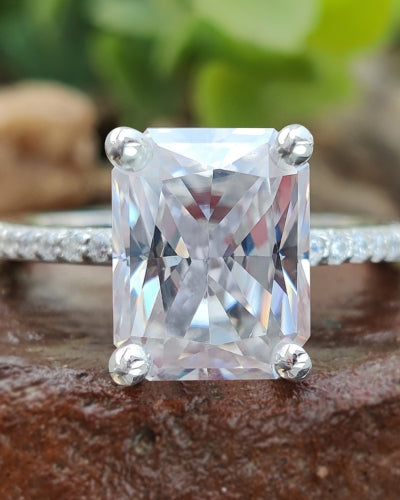
The kite cut is a unique fancy shape — elongated, with angular lines resembling a flying kite. It’s prized for modern, artistic jewelry designs and pairs exceptionally well with creative settings like bezels and halos. Kite-cut stones show dramatic flashes on movement and can look larger face-up because of their elongated silhouette.
Kite cut diamond close-up showing angular facets
What is a kite bezel ring?
A bezel setting surrounds the kite-cut center stone with a continuous metal rim. In kite bezel rings the metal often follows the kite shape closely, creating a protective frame. Bezels can be full (completely encasing the girdle) or partial (half bezel).
Key characteristics
Metal rim hugs the stone.
Sleek, modern silhouette.
Excellent protection for the stone’s edges and points.
Low profile — less likely to snag.
Common uses
Everyday rings, active lifestyles, and minimalist designs.
Salt & pepper, colored stones, and unique kite cuts that benefit from a protective rim.
What is a kite halo ring?
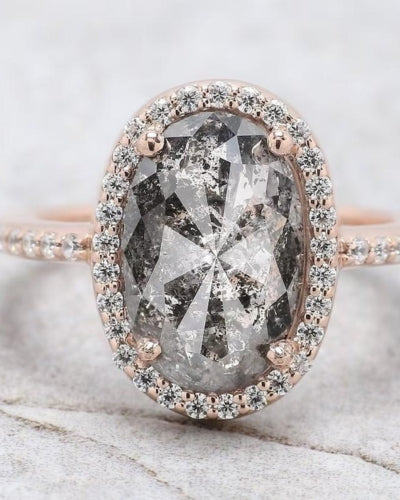
A halo setting places a ring of small accent stones around the kite-cut center, often mirroring its shape. For kite stones the halo is sometimes sculpted to the kite outline (sculpted halo) or circular/oval for a contrast. Halos amplify sparkle and visually increase the apparent size of the center stone.
Key characteristics
Small melee diamonds or gemstones form a ring around center stone.
Maximizes brilliance and face-up size.
Often paired with pavé, split shanks or milgrain details for a statement look.
Design differences: bezel vs halo
Design differences are more than aesthetic — they affect light, silhouette, and comfort.
Silhouette & profile
Bezel: Clean lines, low profile, modern.
Halo: Taller profile (depending on undergallery), ornate and eye-catching.
Visual size
Bezel: Shows true stone size; can slightly reduce apparent brilliance.
Halo: Makes center look larger due to surrounding stones and contrast.
Customization scope
Both settings are highly customizable — bezel can be scalloped, serrated, or contrast in metal color; halo can be single, double, hidden, or sculpted.
Durability & everyday wear
If durability is a priority, bezels are often recommended — the metal rim protects the kite's delicate points and edges. Halos, while secure, expose more of the center and add multiple small stones that require occasional tightening.
Factor
Bezel
Halo
Protection
High
Medium
Snag risk
Low
Medium–High
Maintenance
Low
Medium–High
Repair complexity
Simple
More involved
Sparkle & light performance
Bezel settings redirect light differently — the metal rim can reduce light entering the girdle area, lending a subtler glow. Halo settings add many reflective surfaces which increase overall brilliance and scintillation.
Which appears brighter?
Halo: Wins for overall flash and face-up dazzle.
Bezel: Wins for a focused, refined glow and a contemporary aesthetic.
Price comparison & cost drivers
Price is affected by metal weight, number and quality of melee stones (halo), labor for sculpting, and overall design complexity.
Bezel rings: Often less expensive than a halo of equivalent center because of fewer accent stones, but thicker metal may increase metal cost.
Halo rings: Add cost for melee diamonds and setting labor; high-quality uniform melee can be pricey.
Example price drivers
Center stone carat and quality
Number, quality, and cut of halo melee
Metal purity (14K vs 18K vs platinum)
Customization and hand-finishing
How to style each setting
Both settings can be styled to match personal taste. Here are curated style directions.
Bezel style ideas
Polished, minimal bezel for modern brides.
Contrasting metal edge — rose gold bezel around white diamond for warm accent.
Matte finish bezel for an understated look.
Halo style ideas
Sculpted halo to follow kite outline for a tailored look.
Double halo for vintage glamour.
Colored gemstone halo (sapphires, emeralds) for contrast around a kite diamond.
Best metals for kite bezel & halo
Platinum: Best for hypoallergenic longevity; ideal for bezels that protect the stone long-term.
18K gold: Luxurious finish for both bezels & halos.
14K gold: Durable and cost-effective for everyday wear.
Two-tone: Use white metal for halo and warm metal for bezel edges to dramatize contrast.
Sizing & fit considerations
Because bezels add metal around the stone, they can change perceived size and weight. For halo rings pay attention to ring profile height — higher settings may require careful sizing for comfort, especially with wedding bands.
Maintenance & cleaning
Cleaning approaches differ slightly:
Bezel: Gentle warm soapy water, soft brush around the rim. Fewer crevices means easier maintenance.
Halo: Requires a soft brush into the melee settings; occasional professional inspection for loose melee is advised.
Who should choose which?
Choose bezel if: You live an active lifestyle, prefer minimal design, want maximum protection, or like a modern look.
Choose halo if: You want maximum sparkle, prefer vintage or dramatic styles, or want the center to look larger.
Case studies & real examples
Below are three anonymized real-experience vignettes (E-E-A-T style — expert + experience):
Case study A — The daily-wear designer
A client who works with their hands chose a full bezel kite ring in 14K rose gold to protect the kite points. After two years, the bezel maintained integrity and required only routine cleaning. The client valued peace-of-mind over maximum sparkle.
Case study B — The show-stopping engagement
A customer wanted dramatic impact for photography. We created a sculpted kite halo with premium melee and a hidden halo undergallery. The ring photographed larger and delivered the high-drama look desired for the proposal event.
Case study C — The hybrid solution
For a balanced approach, a half-bezel with a partial halo was designed. This offered the protection at vulnerable points while still framing the stone with sparkle — a true middle-ground solution.
Step-by-step guide to ordering or customizing
Choose center kite stone: Decide carat, clarity, and color based on budget and desired look.
Pick setting type: Bezel, halo, or hybrid.
Select metal: Platinum, 18K, 14K, or two-tone.
Request renderings: Ask for CAD or photos of a prototype when available.
Confirm measurements: Check ring size, profile height, and shoulder width.
Approve final proof and start production.
Receive inspection & maintenance plan.
Ready-made kite collections and halo/bezel examples can help you visualize choices — view curated kite designs directly on FancyDiamondJewels:
Use these placeholders to imagine finished pieces (replace with final product photography before publishing):
Placeholder: kite bezel ring front view Placeholder: kite halo ring front view Infographic placeholder: comparison of kite bezel and kite halo
Professional jeweler tips (E-E-A-T experience)
Always inspect the kite point under magnification before setting — slight chips are easier to repair when caught early.
For bezel settings, ensure the rim follows the kite contour closely — a loose rim can hide inclusions you don’t want trapped.
For halos, insist on well-matched melee in color and clarity to avoid grayish halos.
Wedding band compatibility
Bezel rings often pair well with simple, contoured bands. Halo rings pair beautifully with pavé or diamond-studded bands — consider stacking options and ensure profile heights match.
Sizing guide & what to ask
Ask for shank width and ring profile height if you plan to stack bands.
Request CAD or physical wax proofs for custom pieces.
Confirm the bezel thickness (1–1.5 mm is common) for durability without bulk.
Price sample table (illustrative)
Center stone
Bezel design (est.)
Halo design (est.)
0.75 ct kite, SI1, H
$900–$1,400
$1,200–$2,000
1.5 ct kite, VS2, G
$2,200–$3,500
$3,000–$5,000
2.5 ct kite, VVS1, D
$8,500–$11,000
$10,000–$15,000+
Note: These are illustrative ranges. Final price depends on metal, melee quality, labor, and customization.
Sustainability & lab-grown options
Lab-grown kite diamonds offer an ethical and cost-effective alternative. They are especially popular in halo designs (where many melee are required) because the lower price of lab melee allows for higher total carat weight with budget management.
How to inspect before buying — checklist
Check for chips at kite points under magnification.
For bezels, ensure the rim is smooth and even with no gaps.
For halos, inspect melee uniformity and prong security.
Request stone certificates (GIA, IGI, or equivalent) for the center stone.
Ask about warranty and routine maintenance offerings.
Step-by-step care guide
Daily wipe with a soft lint-free cloth.
Weekly soak in warm water with mild dish soap; gently brush around accents and rim.
Monthly visual inspection for loose stones or ragged bezel edges.
Annual professional cleaning and tightening check.
FAQs
1. Is a bezel or halo better for a kite-cut diamond?
It depends: choose bezel for protection and a minimal look; choose halo for extra sparkle and to make the center appear larger.
2. Will a bezel make my kite diamond look smaller?
A bezel can slightly reduce visible brilliance but generally does not make the stone look significantly smaller — metal contour can create a bold modern look that reads as substantial.
3. How much more does a halo add to the price?
Costs vary, but a halo typically adds the cost of melee plus labor — expect a premium that depends on melee quality and quantity.
4. Are bezels good for colored stones?
Yes. Bezels protect softer colored stones and can add contrast when using mixed metals.
5. Can a bezel be combined with a halo?
Yes — hybrid designs exist (partial bezel + halo) for a balanced approach of protection and sparkle.
6. Which setting is easier to resize?
Both can be resized, but bezels are generally simpler; halo rings with pavé may require re-setting of melee during resizing.
7. Does a halo snag on clothes?
Halos can snag more than bezels due to exposed small stones and prongs — proper finishing minimizes snag risk.
8. Can I wear a kite halo daily?
Yes, with care — regular cleaning and occasional inspection of melee is advised for daily wear.
9. Are lab-grown kite diamonds suitable for halos?
Absolutely — lab-grown melee is cost-effective and consistent for halo applications.
10. What metal is best for kite points?
Platinum or 18K gold are excellent choices for durability; platinum offers the best long-term structural stability.
Structured data (JSON-LD)
Conclusion & next steps
Choosing between a kite bezel ring and a kite halo ring comes down to priorities: protection and minimalism vs. brilliance and drama. If you want help visualizing a custom design or seeing prototypes, FancyDiamondJewels offers curated kite collections and custom consultations to match your lifestyle and style goals.



Leave a comment
This site is protected by hCaptcha and the hCaptcha Privacy Policy and Terms of Service apply.