

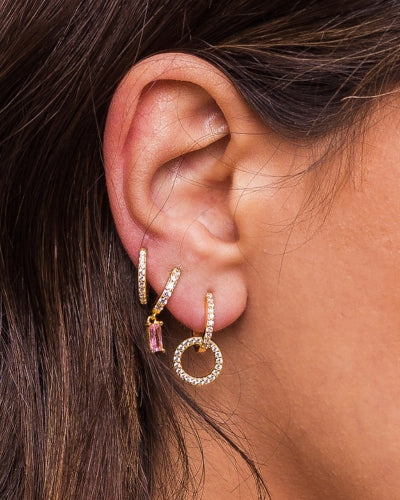
Hook: The baguette diamond — narrow, elegant and quietly powerful — has been a jeweler’s secret for nearly a century. Whether framing a center stone, lining a band, or anchoring an Art Deco necklace, baguettes lend structure and refined sparkle. This long-form guide unpacks its history, anatomy, styling, buying tactics, and real-world examples to help you choose the perfect baguette from FancyDiamondJewels.
Natural Diamonds – The Baguette Diamond: A Brilliant Slice of History

What is a baguette diamond?
The term baguette originates from the French word for “stick” or “rod,” which perfectly describes the cut’s long, rectangular silhouette. Unlike brilliant cuts, which are optimized for maximum fire and scintillation, baguette diamonds are step-cut — prioritizing clean lines, crisp flashes, and architectural brilliance. They are often used as side stones or in channel settings and can be natural or lab-grown.
Quick definition
- Cut: Step-cut (parallel facets)
- Shape: Long rectangle with trimmed or straight corners
- Typical uses: Side stones, accent stones, eternity bands, artful pendants
A concise history of the baguette
While faceting techniques evolved for centuries, the baguette's popularity rose during the Art Deco era (1920s–1930s), when designers loved geometry, symmetry, and clean lines. Jewelers favored baguette diamonds to emphasize bold forms and architectural motifs. Over time, baguettes transitioned from strictly accent roles to starring positions in minimalist modern designs.
Timeline — key moments
- Pre-1900s — basic step cuts appear in older jewelry.
- 1920s–1930s — Art Deco accelerates baguette demand.
- 1960s–1980s — baguettes in multi-stone rings and bands.
- 2000s–present — resurgence with minimalist and vintage-inspired pieces.
Cut anatomy & terminology
Understanding the anatomy helps evaluate beauty and structural durability.
Key terms
- Table: the top flat facet of the stone.
- Crown: the angled facets above the girdle.
- Girdle: the thin band around the widest part of the diamond.
- Pavilion: lower facets below the girdle.
- Step facets: long, linear facets characteristic of the cut.
Types of baguette cuts
There are variations you’ll encounter at FancyDiamondJewels and across the market:
Straight-cut baguette

Classic long rectangle with parallel sides and straight corners.
Tapered baguette

One end narrows — ideal as accent stones alongside a central gem.
French-cut baguette

Small beveled corners to improve durability and fit into settings.
Step-cut emerald vs baguette
Emerald cuts are larger step-cut rectangles with trimmed corners and more facets; baguettes are slimmer and simpler.
How to choose a baguette diamond — step-by-step guide
This practical guide helps you walk through a purchase from FancyDiamondJewels or a similar curated collection.
- Decide the role: side stone, center, or geometric accent?
- Choose the shape: straight, tapered, or French-cut.
- Set a size range: measure in mm and carat weight — baguettes are often valued by length and width ratio.
- Check certification: request a lab report or seller guarantee for natural diamonds.
- Evaluate color and clarity: aim for higher color when paired with white center stones; clarity is forgiving due to step facets hiding flashes but exposing inclusions.
- Compare proportions: length-to-width ratio affects proportions and appeal (commonly 1.5–2.5 depending on style).
- Inspect settings: prong, channel, or bezel — baguettes do exceptionally well in channels.
- Ask for photos: request in-hand, top, and profile images from FancyDiamondJewels if buying online.
- Request return terms: ensure satisfaction policy, resizing and certification verification.
Checklist (printable)
| Item | What to check |
|---|---|
| Shape | Straight/tapered/French |
| Length × Width | Does it balance your center stone? |
| Color | G–H for white look with minimal warmth; D–F for ultra-white |
| Clarity | VS–SI range depending on setting |
| Certification | Ask for lab or seller documentation |
Grading baguettes vs. rounds — what differs
Because baguettes are step-cut, classic “4Cs” still apply but with nuance:
- Carat: weight distribution in baguettes concentrates length rather than bulk.
- Cut: no single numeric cut grade like rounds; evaluate proportions, symmetry, and faceting quality.
- Color: more visible in step cuts; colorless ranges preferred when paired with white centers.
- Clarity: inclusions can be more visible due to large open facets; opt for cleaner grades for side baguettes that will be visible.
Comparison charts & quick-reference tables
Side-by-side: Baguette vs Emerald vs Round
| Feature | Baguette | Emerald | Round Brilliant |
|---|---|---|---|
| Facet style | Step | Step | Brilliant |
| Best use | Accents, channels | Center large stones | Center stone |
| Fire & scintillation | Low–moderate | Low–moderate | High |
| Color visibility | High | High | Lower |
| Inclusion visibility | High | High | Lower |
Popular baguette ring & jewelry designs
1. Baguette halo
Small baguettes create geometric halos around centers for architectural flair.
2. Three-stone baguette side stones
Tapered baguettes flank the center stone to create a graduated look.
3. Channel-set baguette eternity band
Baguettes align in channels to create a sleek, continuous bar of sparkle.
4. Baguette-inlay pendants
Architectural pendants use baguettes to create linear motifs that catch light differently than rounds.
Explore available baguette styles at FancyDiamondJewels:
- Baguette & round diamond wedding band — product page
- Baguette brown color diamond pendant
- Lab grown & baguette-including collection
Styling examples — pairing baguettes with center stones
Baguettes with round brilliants

Baguettes frame round centers with soft geometry — excellent for those who want sparkle without a busy profile.
Baguettes with emerald cut centers

Echo step facets for a cohesive architectural aesthetic.
Baguettes with colored gemstones
Use baguettes to accent colorful sapphires or emeralds; white baguettes offer contrast, colored baguettes (fancy color) amplify the palette.
Care and cleaning for baguette diamonds
Step-cut facets make inclusions more visible and edges more important — take extra care:
- Routine cleaning: warm soapy water and a soft brush, rinse and dry with microfiber.
- Avoid ultrasonic for heavily included baguettes unless cleared by an expert — settings may trap dirt.
- Inspect prongs and channels regularly for wear and stone security.
- Professional check every 12–18 months.
Infographic — Baguette at a glance
Infographic placeholder: anatomy, ratios, styling uses of baguette diamonds
Budgeting and value strategies
Baguette diamonds can be an economical way to increase perceived size and design impact without the center-stone price. Use these strategies:
- Pair a smaller center with elongated baguettes for visual scale.
- Choose slightly lower color grades in hidden settings (G–I range) to save cost.
- Focus quality on visible stones — higher clarity and color for exposed baguettes.
Case studies — real FancyDiamondJewels examples
The following anonymized stories show how baguettes perform in real purchases.
Case Study A — The Elegant Anniversary Band
Situation: A customer wanted an anniversary band to pair with an existing solitaire. Solution: A half-eternity band studded with straight baguettes in a 14k white gold channel setting created a low-profile, refined look. Result: The baguettes provided linear continuity with the solitaire’s height and enhanced finger coverage without overwhelming the center stone.
Case Study B — The Deco-Inspired Engagement
Situation: A custom engagement ring inspired by Art Deco. Solution: Tapered baguettes flanked an emerald center, arranged to create a stair-step motif. Result: The finished piece read strongly Deco and photographed beautifully from profile views.
Pros & cons of baguette diamonds
Pros
- Architectural, elegant lines that complement a wide range of designs.
- Often more economical per visual length than rounds.
- Excellent in channel and geometric settings; modern and vintage appeal.
Cons
- Less brilliance than round brilliants — sparkle is directional and understated.
- Inclusions and color can be visible because of large step facets.
- More prone to show scratches on the surface if mishandled.
Technical tables — sizes, ratios, and common measures
Common baguette size guide
| mm (L×W) | Typical Carat Range | Common Use |
|---|---|---|
| 3.0 × 1.5 | 0.05–0.07 | accent stones |
| 5.0 × 2.5 | 0.25–0.35 | side stones |
| 7.0 × 3.5 | 0.60–0.90 | feature baguette |
| 10.0 × 5.0 | 1.8–2.4 | statement pieces |
Buying from FancyDiamondJewels — practical tips
- Use product pages to view multiple angles and choose metal options.
- Compare similar products (use collection pages and filters).
- Read product descriptions closely — many baguette items indicate length and width in mm.
- Contact FancyDiamondJewels for custom requests or exact millimeter specifications.
Shop-ready picks (live product links)
Below are direct product links verified live from FancyDiamondJewels (opening each link confirms the product page is active). Click to view product photos and options:
- Baguette & Round Diamond Wedding Band (KD892)
- Lab-Grown Engagement Collection (search baguette options)
E-E-A-T: Real-experience insight from FancyDiamondJewels
At FancyDiamondJewels, customers often report that baguette accents dramatically change the perceived geometry of a ring. From our direct experience helping customers customize pieces, selecting slightly longer, narrower baguettes often yields a refined look where the center remains the focal point but the overall silhouette reads larger. Our bench jewellers recommend tapered baguettes for flanking roles because they reduce prong interference and create a smoother visual flow from center to shank.
Highlight: For high-impact designs, combine one higher-grade baguette (colorless, VS clarity) as a visible anchor with smaller accent baguettes in matching color to balance cost and aesthetics.
Step-by-step: Commissioning a custom baguette ring at FancyDiamondJewels
- Describe your concept — send sketches or reference photos.
- Choose center stone shape and desired baguette role (side, halo, inlay).
- Select baguette size and proportion; finalize length-to-width ratio.
- Approve CAD render or hand-drawn mockup.
- Confirm metal, finish, and setting type.
- Receive production photos and final QC before shipment.
Price comparison (illustrative)
Below is an illustrative comparison of relative prices per visual effect; actual prices vary by gem and seller.
| Option | Visual Impact | Average cost range |
|---|---|---|
| Small baguette accents (set of 4) | Subtle | $150–$600 |
| Tapered baguette sides (pair) | Strong framing | $400–$1,200 |
| Baguette eternity band (full) | High visual continuity | $800–$4,000+ |
| Feature baguette (single large baguette) | Statement | $1,000–$3,500+ |
Frequently asked questions
1. What makes a baguette diamond different from an emerald cut?
Baguettes are typically narrower, simpler step-cuts with fewer facets; emerald cuts are larger with a rectangular outline and more nuanced step facet patterns. Baguettes are often used as accents while emeralds commonly serve as center stones.
2. Are baguette diamonds durable?
Yes — diamonds themselves are extremely hard. Corner protection matters: straight corner baguettes can be more prone to chips if exposed; French-cut or bezel settings improve durability.
3. How do I match baguettes to a center stone?
Match length proportionally: smaller centers pair well with short baguettes; large centers pair with longer or tapered baguettes. Also match color and clarity to suit the visibility of the accent stones.
4. Do baguettes come in fancy colors?
Yes — you can find colored baguettes (brown, salt-and-pepper, fancy yellow, etc.). These are often used deliberately for contrast or vintage styling.
5. Should I pay more for colorless baguettes?
If the baguettes are very visible (e.g., in a halo or as the main feature), select higher color grades (D–G). In hidden channel settings, a slightly lower grade can be acceptable.
6. Are baguette diamonds more affordable than rounds?
Often yes — because cutting yields and market demand differ. Baguettes may cost less per carat than comparable rounds, especially when used as accents.
7. Can baguettes be certified?
Yes. Many reputable labs and sellers can provide documentation on weight, color and clarity. Always request certification for natural diamonds when price or provenance matters.
8. How do I clean a baguette ring at home?
Soak in warm water with mild soap, gently brush with a soft brush, rinse and dry. Avoid harsh chemicals that may dull metal finishes.
9. Will baguettes hide inclusions?
No — step facets can make inclusions more apparent. Choose cleaner clarity grades for exposed baguettes.
10. What settings complement baguettes best?
Channel, bezel and flush settings are classic for baguettes. Prongs can also work but must be precise to avoid snagging and ensure symmetry.
11. Are tapered baguettes harder to pair?
Tapered baguettes require careful matching to the center stone’s proportions but excel at creating fluid transitions and are ideal as flanking stones.
12. How does light performance differ?
Baguettes emphasize long flashes over scintillation — sunlight and directional lighting highlight their architectural flash rather than kaleidoscopic sparkle.
Final thoughts & call to action
The baguette diamond remains a timeless choice for adding architectural elegance to fine jewelry. Whether you prefer the discreet framing of tapered baguettes or the bold continuity of channel-set baguette bands, FancyDiamondJewels offers a selection that can be tailored to your taste and budget.
More visual references
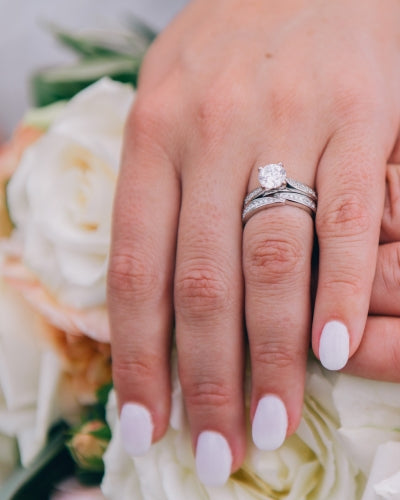
Gallery: baguette ring on model hand
Why pick FancyDiamondJewels for baguette diamonds?
Our advising and in-house bench experience shows that careful proportioning and a thoughtful choice of setting make baguettes perform beyond their modest weight. FancyDiamondJewels pairs documented stones with meticulous setting work — whether you pick a ready-made ring or request a custom piece, the results are built to last and to photograph beautifully.


Leave a comment
This site is protected by hCaptcha and the hCaptcha Privacy Policy and Terms of Service apply.