
Custom / Bespoke Diamond Jewelry: Why People Choose It & How It’s Made
Hook: A bespoke diamond piece is more than metal and stone — it is a narrative: your story rendered in fire and metal. For anyone considering an engagement ring, heirloom redesign, or one-of-a-kind statement piece, understanding why bespoke jewelry matters — and how a luxury artisan workshop transforms an idea into a wearable heirloom — makes the investment feel not only sensible, but deeply personal.
Custom (bespoke) diamond jewelry offers personalization, superior craftsmanship, ethical sourcing options, and often better value-per-design when compared to off-the-shelf pieces. This guide walks you through 12+ steps of the design and making process, cost and timeline considerations, pros & cons, case studies from FancyDiamondJewels, care advice, and 10+ FAQs to help you confidently commission a piece.
Table of contents
- Why Choose Bespoke Diamond Jewelry?
- Value & Advantages — A Deep Dive
- Who Commissions Bespoke Jewelry?
- Materials & Ethical Sourcing
- Design Process — Overview
- Step-by-step: From Idea to Heirloom
- Crafting Techniques & Technology
- Costs, Timelines & Budgeting
- Comparison: Bespoke vs Ready-Made
- Case Studies & Examples
- Care, Insurance & Resizing
- Pros & Cons
- Shopify Publishing Tips & On-Page SEO
- Infographic & Visual Guide
- Call to Action
- FAQs
Why Choose Bespoke Diamond Jewelry?
People choose bespoke diamond jewelry for emotional, practical, and aesthetic reasons. Bespoke pieces reflect identity, signify milestones, and allow full control over diamond quality, metal choice, setting style, and budget allocation. At FancyDiamondJewels, clients consistently tell us they commission custom work to ensure a ring or pendant is truly unique and crafted to last generations.
Emotional significance
A bespoke ring can incorporate sentimental stones, a family heirloom diamond re-cut or reset, or a motif that represents shared interests. When a ring becomes a story anchor — the moment it was designed, who was involved, why each choice was made — it becomes a living piece of family history.
Design control & uniqueness
Off-the-shelf pieces are necessarily standardized. Bespoke design allows you to choose exact proportions, metal finishes, engraving, and even micro-engraved personal messages in hidden places.
Fit for lifestyle
Active lifestyles, occupational needs, and personal style influence the technical specs of a ring (e.g., low-profile vs. high-set, bezel vs. prong) — bespoke design optimizes for daily wearability without sacrificing beauty.
Value & Advantages — A Deep Dive
- Optimized diamond selection and cutting choices that match your budget.
- Possibility to re-use existing stones for cost-effectiveness and sustainability.
- Better long-term value: a well-made custom piece retains desirability and can become a heritage asset.
- Ethical sourcing: choose lab-grown, recycled metals, or responsibly-mined diamonds.
Who Commissions Bespoke Jewelry?
Clients who commission bespoke jewelry typically include engaged couples seeking unique engagement rings, individuals reworking family stones, collectors wanting a statement piece, and designers or stylists seeking runway-ready items. FancyDiamondJewels serves international clients — with design consultations by appointment — and many clients choose bespoke for the exactness and provenance it provides.
Materials & Ethical Sourcing
Material decisions include the diamond (natural vs lab-grown), diamond grade (the 4Cs), metal (gold karat and color, platinum), and accent stones (sapphires, emeralds, moissanite). FancyDiamondJewels emphasizes transparency in sourcing and offers options for conflict-free natural diamonds, certified lab-grown diamonds, and recycled precious metals.
Choosing diamonds: 4Cs in action
- Cut: Most impactful to sparkle — prioritize excellent-to-very-good cuts for brilliance.
- Color: Near-colorless to colorless (D–J) for white diamonds; fancy colors for unique looks.
- Clarity: Eye-clean (SI1 or VS2 depending on cut and size) often gives the best value.
- Carat: Balance size and proportionality; design choices can make smaller stones appear larger.
Design Process — Overview
Commissioning a bespoke piece typically follows a structured path: consultation → moodboard → sketches → CAD / 3D render → sample wax / 3D print → production → finishing & hallmarks → delivery. Each step includes client approvals and opportunities to refine.
Step-by-step: From Idea to Heirloom
1. Initial consultation (in-person or remote)
Discuss intent, budget, timeline, metal preference, and any stones you want to reuse. At FancyDiamondJewels this can be done via appointment on the Contact page or through the Ring Builder to start experiments with shapes and settings.
2. Inspiration & moodboard
Collect reference images, color palettes, and textures. Designers translate these into a visual brief and initial sketches.
3. Concept sketches & options
Multiple hand-drawn or digital sketches show proportions and aesthetic direction. The client selects 1–2 directions to advance into CAD.
4. CAD modeling & photorealistic renders
Detailed 3D CAD models let you see the piece at lifelike angles and confirm scale. This step is where precision tolerances are set for stone seats, prong thickness, and comfort fit.
5. Prototyping (3D print or wax)
Clients often approve a 3D-printed or wax model to check fit, balance, and comfort before committing to metal. This physical mock-up is invaluable for adjusting prong height and finger feel.
6. Stone selection & setting preparation
Stone selection takes place with lab certificates or internal grading notes; exact seat dimensions are set in the CAD to ensure a secure fit. If using existing stones, measurements and matching are done at this stage.
7. Casting or fabrication
Depending on the design, artisans will either cast the basic form and hand-finish it or fabricate components from sheet and wire for ultra-precise lines.
8. Stone setting
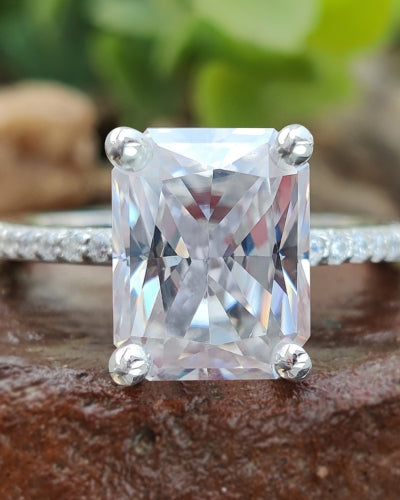
Setting techniques include prong, bezel, pavé, channel, and tension settings. A master setter secures stones using controlled pressure and microscopes for minute work.
9. Finishing, polishing & hallmarking
Finishing includes final polishing, texture application (satin, matte, hammered), engraving, and hallmarking. This is the stage where the piece transitions from 'made' to 'polished heirloom.'
10. Quality inspection & delivery
Every bespoke piece undergoes a multi-point quality check: metal purity, stone security, symmetry, polish, and report verification. Delivery is arranged with insured shipping or showroom pickup.
Crafting Techniques & Technology
Traditional handcraft
Hand-fabrication and hand-setting remain prized for control and finish. Techniques like hand-sawn filigree, soldered millegrain, and hand-chased detailing are signatures of artisan workshops.
Modern tech: CAD & 3D printing
CAD improves accuracy and repeatability for complex geometries; 3D printing speeds prototyping and allows creative freedom (e.g., intricate latticework) that would be time-consuming by hand.
Advanced finishing
Micro-pavé uses precise drills and microscopes; laser welding allows repair and minute joins; rhodium plating for white gold and selective oxidation for contrast are common advanced finishes.
Costs, Timelines & Budgeting
Typical timeline: from 3 weeks (simple changes or small modifications) to 8–14 weeks (highly complex, multi-stone, or international shipping and certification). At FancyDiamondJewels we publish approximate timelines on our Ring Builder and discuss exact lead times during the initial consultation.
Cost factors
- Diamond quality & size (single biggest cost driver).
- Metal choice (platinum > 18K gold > 14K gold).
- Complexity of design (hand-engraving, hidden mechanics, convertible settings).
- Prototyping and revisions (each major revision adds time and cost).
- Certification & grading reports (GIA, IGI, or internal reports).
Comparison: Bespoke vs Ready-Made
| Aspect | Bespoke | Ready-Made |
|---|---|---|
| Uniqueness | Unique — tailored to client | Mass-produced designs |
| Price | Often higher per piece but optimized for value | Lower upfront cost |
| Lead time | Weeks to months | Often immediate or days |
| Control over materials | Full control | Limited choices |
Case Studies & Examples
Case Study A — Recut and reset heirloom diamond
Client brought a 1.5ct family diamond with visible clouding. After lab analysis and consultation, the stone was recut to improve proportions (losing ~10% in carat weight) and reset in a low-profile platinum bezel with hidden engraving. The recut improved brilliance and produced a wearable modern heirloom while preserving provenance and sentimental value.
Case Study B — Unique three-stone design with mixed metals
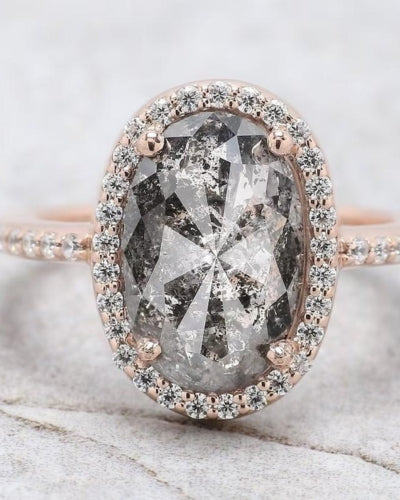
A couple wanted a ring that combined rose gold warmth with platinum strength. The design used a recycled platinum core for structural strength with rose gold accents and pavé set side stones. The final piece balanced contrast and durability for an active wearer.
Pros & Cons
Pros
- Unique, personal designs.
- Ethical, traceable sourcing feasible.
- Custom fit and comfort options.
- Potentially higher resale and sentiment value.
Cons
- Longer lead times.
- Higher upfront cost in many cases.
- Requires more involvement and decision-making.
Care, Insurance & Resizing
Proper care extends a piece’s life: regular cleanings, annual checks by a professional setter, and insured shipping when traveling. FancyDiamondJewels provides resizing, cleaning, and service policies; details are listed under and service pages in the site navigation.
Shopify Publishing Tips & On-Page SEO
This article is structured for Shopify: include keyword-rich title, meta description (above), canonical link, OG tags, and JSON-LD schema. Use structured headings (H1, H2s, H3s), descriptive image alt attributes, and internal links to relevant shop pages like Collections and the Ring Builder.
Infographic & Visual Guide
Below are design and process visuals — place final art files in Shopify assets and update src paths as needed. These are ready-made Image tags:
Bespoke diamond ring design sketch and finished ring

Timeline graphic showing consultation, CAD, prototype, production, finish

Diamond cut comparison chart infographic for brilliance and dispersion

Ready to start your custom design?
If you’re ready to begin, use our Ring Builder to try initial ideas. FancyDiamondJewels offers remote design appointments and secure global shipping.
Frequently Asked Questions
1. What is the difference between bespoke and custom jewelry?
Answer: Both terms overlap. "Custom" often implies a modification to an existing template; "bespoke" traditionally suggests a fully tailored design from concept to finish. At FancyDiamondJewels we use both terms for personalized commissions and will clarify during consultation.
2. How long does a bespoke engagement ring take?
Answer: Typical timelines range from 3–12 weeks depending on complexity, stone sourcing, and client revisions. Highly intricate or multi-stone pieces can take longer.
3. Can I use existing family stones?
Answer: Yes. Many clients repurpose diamonds or colored stones. We inspect, measure, and plan the setting to ensure secure fit and aesthetic balance.
4. Do you offer lab-grown diamonds?
Answer: Yes. FancyDiamondJewels offers lab-grown diamonds as an ethical and budget-friendly option; we provide certificates and photo-grade images on request.
5. How much does a bespoke ring cost?
Answer: Costs vary widely. A modest bespoke ring (small center stone, simple setting) might start at a few hundred dollars; engagement rings with high-quality natural diamonds and complex settings can be several thousand to tens of thousands. We provide detailed estimates after the first consultation.
6. Are bespoke pieces refundable?
Answer: Refund policies for bespoke items differ from ready-made products due to the personalized nature of the work. Please consult our Contact page for our bespoke policy and service terms.
7. Can I see a prototype before final production?
Answer: Yes — we typically produce a 3D-printed prototype or wax model for client approval before casting or fabrication.
8. What certifications do diamonds come with?
Answer: We provide grading reports for qualifying stones (e.g., GIA, IGI) when available and advise clients when a formal certificate is recommended.
9. Do you provide warranty and maintenance?
Answer: Yes — details vary by piece. We offer cleaning, polishing, and repair services; contact us via our Contact page for specifics.
10. How do I insure my bespoke jewelry?
Answer: You can insure your piece with household or jewelry insurance; we recommend obtaining an appraisal and a condition report to support an insurance policy.
11. Will you ship internationally?
Answer: Yes. FancyDiamondJewels arranges secure, insured international shipping. Delivery options and customs vary by country and are discussed during checkout or consultation.
E-E-A-T: Real-Experience Insights from FancyDiamondJewels Artisans
Our senior bench jeweler has 12+ years of hand-setting experience; the workshop in India handles fabrication and finishing under direct oversight by our master craftspeople. Over the years we’ve executed thousands of custom commissions, from delicate re-settings to complex sculptural pieces. That track record informs our approach: recommend slightly larger prongs for higher-activity wearers, prefer platinum for thin shanks on high-value stones, and prototype any design with undercut concerns.
When prioritizing brilliance on a budget, prioritize cut over color and clarity. A well-cut smaller diamond often appears brighter than a larger poorly-cut stone.
Commissioning Checklist (printable)
- Decide budget range
- Collect inspiration images
- Find any stones you want to reuse
- Book consultation via Contact or Ring Builder
- Confirm timeline and approval points
- Request grading/certification for purchased stones
- Review final mock-up and approve
Technical Reference Table: Common Settings & Best Uses
| Setting | Pros | Best for |
|---|---|---|
| Prong | Maximum light, classic look | Solitaire, engagement rings |
| Bezel | Very secure, clean silhouette | Active wearers, modern designs |
| Pavé | Sparkle across surfaces | Accent bands, halos |
Quick conversion & care notes
- Gold purity: 24K (pure) / 18K (75% gold) / 14K (58.3% gold) — 18K is commonly used for fine bespoke pieces for balance of purity and strength.
- Platinum vs Gold: Platinum is harder-wearing and slightly heavier; gold is warmer and more malleable for intricate details.
- Cleaning: Mild soap, warm water, soft brush; remove for sports or heavy labor.
Final words — What to expect working with FancyDiamondJewels
Expect a collaborative, transparent process. From our craft bench in India to clients globally, we strive for clarity on materials, timeline, and costs. Use our Collections for inspiration, then elevate the concept into a bespoke piece through the Ring Builder or a dedicated consultation.


Leave a comment
This site is protected by hCaptcha and the hCaptcha Privacy Policy and Terms of Service apply.