
Artículo: The History of Royal Jewelry for European Men: From Medieval Kings to Modern Royalty
The History of Royal Jewelry for European Men: From Medieval Kings to Modern Royalty
Royal jewelry for European men has never been simply decoration. Across centuries, rings, jeweled badges, chains, medals, brooches, ceremonial ornaments and precious gemstones have communicated identity, authority, family heritage, wealth, allegiance and personal taste. A king's ring could carry a seal. A jeweled order could identify membership in an elite institution. A gemstone could represent dynastic wealth. A carefully chosen gold ring could turn an ordinary formal outfit into a statement of status.
The history of men's royal jewelry is therefore also a history of European society. As monarchies changed, jewelry changed with them. Medieval rulers favored pieces that reinforced sovereignty and religious authority. Renaissance courts developed elaborate systems of dress and personal adornment. Later royal traditions placed greater emphasis on ceremonial orders, medals, signet rings and heirloom pieces. Modern royalty continues to use jewelry selectively, often combining inherited symbolism with understated contemporary style.
Quick Answer: The history of royal jewelry for European men can be understood through several recurring categories: signet rings, coronation and ceremonial rings, jeweled orders, collars and badges, gold chains, brooches, medals and gemstone accessories. Their importance was determined not only by material value but also by symbolism, ownership, heraldry, ceremony and family history. Today, royal-inspired men's jewelry often translates these historical ideas into signet rings, gemstone bands, wedding rings, pendants and other refined pieces.

Table of Contents
- The Origins of Royal Jewelry for European Men
- Medieval Kings and Royal Jewelry
- The Rise of the Royal Signet Ring
- Renaissance Kings and Court Jewelry
- Tudor-Era Men's Royal Jewelry
- French Royal Men's Jewelry
- Habsburg and Imperial Traditions
- Royal Orders, Badges and Collars
- Coronation Rings and Ceremonial Jewelry
- Gemstones Used in Royal Men's Jewelry
- Gold and Precious Metals
- Heraldry, Crests and Personal Identity
- Seventeenth-Century Royal Jewelry
- Eighteenth-Century Court Jewelry
- Nineteenth-Century Royal Jewelry
- Royal Jewelry in the Modern Era
- Major Styles of Royal Men's Jewelry
- What Royal Jewelry Symbolized
- Historical vs Modern Royal-Inspired Jewelry
- How to Choose Royal-Inspired Men's Jewelry
- Step-by-Step Guide to Choosing a Royal Men's Ring
- Step-by-Step Guide to Choosing a Royal Gemstone
- How to Style Royal Jewelry for Men
- How to Care for Royal-Inspired Jewelry
- Historical Style Case Studies
- Common Mistakes to Avoid
- Frequently Asked Questions
The Origins of Royal Jewelry for European Men
The earliest traditions behind European royal jewelry developed from a combination of practical, ceremonial and symbolic needs. Jewelry helped rulers distinguish themselves from other members of society, but it also served useful purposes. Rings could carry seals, pendants could display religious or dynastic symbols, and badges could communicate membership in an order.
For medieval European men, jewelry was closely connected with status. A ruler did not necessarily need a large collection of visible jewelry at all times. Instead, certain objects had exceptional significance because of what they represented. A ring bearing a seal could authenticate documents. A ceremonial ornament could be worn during an important public event. A precious object could become an heirloom passed between generations.
Why Jewelry Mattered to Medieval Rulers
- Identity: Jewelry could display a personal emblem, crest or dynastic symbol.
- Authority: Ceremonial pieces reinforced the visual language of kingship.
- Authentication: Signet rings could be associated with seals and official correspondence.
- Heritage: Valuable jewelry could be preserved and transferred through generations.
- Diplomacy: Precious objects could function as gifts or symbols of political relationships.
- Religious symbolism: Crosses, sacred motifs and gemstones could reflect medieval religious culture.
This combination of function and symbolism established an important principle that remained relevant for centuries: the meaning of royal jewelry could be more important than its size.
Medieval Kings and Royal Jewelry
Medieval Europe produced a rich visual tradition of royal dress. Kings, princes and nobles used textiles, crowns, weapons and jewelry together to communicate rank. Men's jewelry was often less extensive than the jewelry associated with later court fashion, but individual pieces could carry enormous significance.
Royal Rings in the Middle Ages
Rings were among the most important forms of men's jewelry because they could combine decoration with personal identity. A ring could be engraved with a crest, symbol, initials or emblem. The broad surface of a signet-style ring made it particularly suitable for heraldic designs.
Gold was especially appropriate for high-status pieces because of its durability, recognizable appearance and historical association with wealth. Precious stones could be added to create contrast or emphasize the importance of the object.
Chains, Pendants and Brooches
Chains and pendants became useful components of formal dress. A pendant could carry a religious, dynastic or heraldic image. Brooches could secure clothing while simultaneously functioning as decorative objects. The combination of function and ornament made these pieces especially useful in formal royal wardrobes.
Medieval European king inspired men's jewelry with gold ring and gemstone details

The Rise of the Royal Signet Ring
The signet ring deserves special attention because it became one of the clearest forms of masculine European jewelry associated with identity and authority. Unlike a purely decorative ring, a signet could communicate ownership, family identity or official status through an engraved surface.
What Is a Signet Ring?
A signet ring traditionally has a face large enough to carry an engraved design, initials, crest, emblem or other identifying mark. Historically, the engraved design could be pressed into sealing material to create an impression.
The modern signet ring has evolved considerably. Today, it may feature a polished metal face, engraved initials, a family-inspired emblem, a gemstone or a combination of these details.
Why Signet Rings Remain Associated With Royal Style
The appeal comes from their visual balance. A signet ring can look substantial without requiring an oversized gemstone. Its broad face provides space for craftsmanship, while its relatively simple silhouette makes it appropriate for both formal and everyday clothing.
For a contemporary royal-inspired look, a signet ring can be paired with a tailored suit, formal shirt or minimalist wardrobe. The objective is usually restraint rather than excessive decoration.
Renaissance Kings and Court Jewelry
The Renaissance transformed European court culture. Art, architecture, fashion and jewelry became increasingly sophisticated, and wealthy courts used visual presentation to demonstrate refinement.
From Practical Objects to Art Objects
Men's jewelry increasingly became an opportunity for goldsmiths and gemstone workers to demonstrate technical skill. Rings could contain intricate engraving, unusual gemstone arrangements or elaborate metalwork. Pendants and badges could be designed as miniature works of art.
Gemstones in Renaissance Royal Jewelry
Colored gemstones were particularly effective because they introduced vivid visual contrast against gold. Rubies, sapphires, emeralds, pearls and other stones became associated with luxury and status.
Gemstones were not chosen solely for color. Their rarity, size, cultural associations and availability influenced their desirability. A large and unusual gemstone could become a centerpiece of a royal collection.
Tudor-Era Men's Royal Jewelry
Tudor court culture is an important chapter in the history of European men's jewelry. Wealthy men could wear substantial chains, rings, jeweled ornaments and badges as part of elaborate court dress.
Royal Rings and Portrait Culture
Royal portraits provide valuable visual evidence for understanding historical clothing and adornment. Rings, chains and pendants appear as part of the broader visual language of status.
The Tudor approach illustrates an important historical lesson: men's jewelry did not have to be delicate to be elegant. A substantial ring or chain could be deliberately bold while remaining formal.
What Modern Men Can Learn From Tudor Jewelry
- Use one strong focal piece instead of many competing pieces.
- Choose metal and gemstone colors that complement the clothing.
- Consider proportion carefully.
- Use historical details as inspiration rather than copying an entire costume.
French Royal Men's Jewelry
French royal courts developed highly sophisticated traditions of ceremonial clothing and jewelry. Jewelry could communicate proximity to the court, membership in an order, military distinction or royal favor.
Royal-inspired French styling is often associated with refined proportions, polished gold, heraldic motifs and carefully coordinated accessories. For modern men's jewelry, the lesson is one of controlled elegance: a piece should look intentional rather than overloaded.
Habsburg and Imperial Traditions
Imperial courts created another important branch of European men's jewelry history. Dynastic identity was especially significant, and jewelry could function as part of a larger system of symbols.
Dynasty and Jewelry
A royal jewel could represent more than its owner. It might become associated with an entire dynasty and be passed from one generation to another. This transformed jewelry from a personal possession into an heirloom.
The idea remains relevant today. A men's ring designed around family initials, a meaningful gemstone or a carefully chosen engraving can create a modern heirloom without reproducing historical royal regalia.
Royal Orders, Badges and Collars
Royal orders created some of the most recognizable forms of men's ceremonial jewelry. Orders used distinctive badges, stars, collars and ribbons to identify members and communicate rank.
Why Orders Used Jewelry
In a formal society where clothing communicated social position, an ornate badge offered a highly visible form of recognition. It could identify a person's connection to an institution, honor or royal tradition.
Badges Versus Everyday Jewelry
| Feature | Ceremonial Badge | Everyday Men's Jewelry |
|---|---|---|
| Primary purpose | Recognition and ceremony | Personal expression |
| Typical design | Symbolic and elaborate | Simple to moderately detailed |
| Wear occasion | Formal events | Daily or special occasions |
| Meaning | Institutional or official | Personal, aesthetic or sentimental |
Coronation Rings and Ceremonial Jewelry
Coronation jewelry occupies a special position because it is connected to the formal presentation of monarchy. A coronation is not simply a personal celebration; it is a public ceremony in which objects, clothing and ritual communicate continuity and authority.
The Symbolic Role of a Ring
A ceremonial ring can represent a relationship between ruler, institution and tradition. This is why royal rings should not be evaluated only according to gemstone size or metal weight. Historical context changes the meaning of an object.
Modern jewelry designers can borrow this principle by creating pieces with personal symbolism. An engraved date, family initial, meaningful gemstone or custom crest can transform an attractive ring into something with a stronger story.
Gemstones Used in Royal Men's Jewelry

Gemstones have always played a central role in luxury jewelry. For royal men, stones could be used in rings, ceremonial badges, pendants, brooches and other accessories.
Ruby
Ruby creates a strong red accent and has historically been associated with passion, power and prestige in jewelry traditions.
Sapphire
Sapphire provides a deep blue tone that works particularly well with yellow gold, white metals and formal clothing.
Emerald
Emerald offers an intense green color and a distinctive visual identity. Its saturated appearance can make a men's ring especially memorable.
Diamond
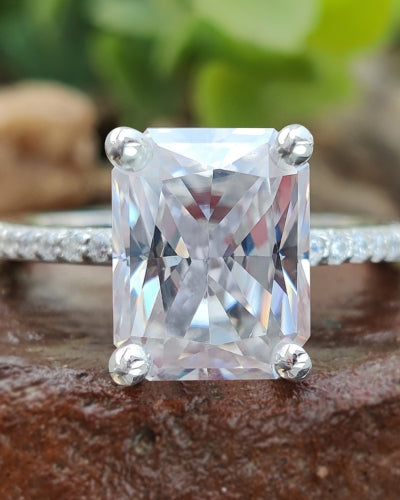
Diamond is valued for its brilliance, hardness and versatility. It can be used as a central gemstone, a border accent or a subtle detail in a men's band.
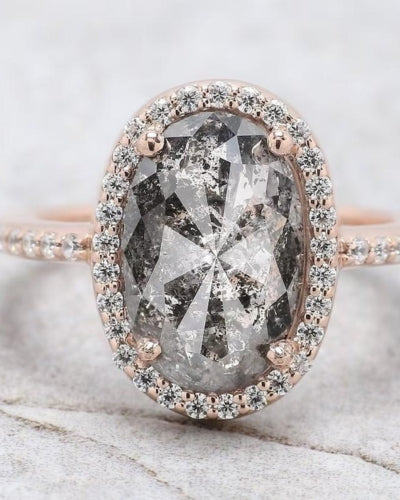
Salt and Pepper Diamonds
Modern men's jewelry has also expanded beyond traditional white diamonds. Salt and pepper diamonds, with their natural-looking inclusions and contrasting tones, can create a more individual and organic appearance.
Explore Salt and Pepper Diamond Jewelry
Gold and Precious Metals in Royal Jewelry
Gold has played a central role in European luxury jewelry because it combines recognizable beauty, workability and durability. Different gold colors can create completely different impressions.
| Metal Style | Visual Character | Royal-Inspired Application |
|---|---|---|
| Yellow Gold | Warm, traditional, heritage-focused | Signet rings and classic bands |
| White Gold | Cool, clean, contemporary | Diamond rings and formal jewelry |
| Rose Gold | Warm, distinctive, romantic | Modern heritage designs |
| Two-Tone Gold | Contrasting and architectural | Statement rings and custom designs |
Heraldry, Crests and Personal Identity
Heraldry is one of the strongest visual influences on royal-inspired men's jewelry. Shields, crowns, initials, animals, monograms and geometric symbols can all become design elements.
Creating a Modern Heraldic Ring
- Choose the primary symbol.
- Decide whether the symbol should be engraved or raised.
- Select the ring's metal color.
- Determine the appropriate face width.
- Add gemstones only if they improve the overall design.
- Check that the ring remains comfortable for regular wear.
- Review the final proportions before production.
A successful modern heraldic ring does not need to look like a museum reproduction. Instead, it can interpret historical visual language through contemporary proportions.
Seventeenth-Century Royal Jewelry
The seventeenth century continued the European fascination with court presentation. Men's jewelry could be substantial, decorative and closely integrated with formal dress.
At the same time, the development of court etiquette meant that jewelry increasingly became part of a complete visual system. Clothing, hairstyle, accessories, medals and jewelry worked together.
The Lesson of Proportion
Historical royal jewelry demonstrates that scale matters. A large jewel can work when the surrounding clothing and accessories support it. The same jewel can look excessive if combined with too many competing details.
This principle remains useful when choosing a contemporary men's statement ring.
Eighteenth-Century Court Jewelry
European court culture continued to place significant emphasis on luxury and ceremonial dress during the eighteenth century. Men's jewelry included rings, buckles, buttons, watches, chains, orders and jeweled accessories.
The period also demonstrates how technology and fashion can change jewelry. As craftsmanship developed, designers gained more ways to cut gemstones, create detailed settings and produce intricate decorative metalwork.
Royal Jewelry and Formal Dress
Men's royal jewelry was most effective when coordinated with clothing. Dark formal fabrics provided a strong background for gold and gemstones, while lighter fabrics created a softer contrast.
Nineteenth-Century Royal Jewelry
The nineteenth century brought major changes to European society, fashion and manufacturing. Jewelry became increasingly available to wealthy consumers beyond royal households, although exceptional pieces remained symbols of extraordinary status.
The Growth of the Heirloom Concept
Family jewelry became increasingly important as a way to preserve memory. Rings and other pieces could be given for marriages, anniversaries, military achievements, inheritances or other important occasions.
This helped establish a modern understanding of men's fine jewelry: a piece could be valuable because of its story as much as its materials.
Royal Jewelry in the Modern Era
Modern royalty generally operates within a different social environment from medieval and Renaissance monarchies. The meaning of jewelry has consequently shifted.
Contemporary royal-inspired men's jewelry tends to favor versatility. A signet ring may be worn with a suit and casual clothing. A gemstone band can become a wedding ring. A simple gold pendant can provide a subtle heritage reference without appearing ceremonial.
From Status Symbol to Personal Signature
The modern gentleman can use jewelry to communicate personality rather than simply social position. This is one of the most important transformations in men's jewelry history.
Royal inspiration today can therefore mean craftsmanship, restraint, heritage, symbolism and confidence rather than literal imitation of a monarch.
Modern royal inspired men's jewelry with luxury gold ring and diamond details
Major Styles of Royal Men's Jewelry
1. Signet Rings
Ideal for heritage-inspired styling and personal engraving.
2. Gemstone Statement Rings
Designed around a central diamond or colored gemstone.
3. Diamond Bands
A refined option for weddings, anniversaries and everyday luxury.
4. Heraldic Rings
Focused on crests, initials, family symbols and engraved motifs.
5. Gold Chains
A classic way to introduce royal-inspired styling without wearing a large ring.
6. Gemstone Pendants
Useful for men who prefer jewelry that can remain partially concealed beneath clothing.
7. Ceremonial-Inspired Pieces
These reinterpret the visual language of medals, orders and historical badges for modern wardrobes.
What Royal Jewelry Symbolized
| Symbol | Historical Association | Modern Interpretation |
|---|---|---|
| Crown | Monarchy and sovereignty | Heritage-inspired motif |
| Shield | Family and heraldry | Personal identity |
| Initials | Personal or dynastic identity | Customization |
| Diamond | Luxury and durability | Fine jewelry and milestone symbolism |
| Gold | Wealth and prestige | Classic luxury |
| Colored gemstone | Rank, wealth and symbolism | Individual style |
Historical vs Modern Royal-Inspired Jewelry
| Category | Historical Royal Jewelry | Modern Royal-Inspired Jewelry |
|---|---|---|
| Main purpose | Status, ceremony and identity | Style, identity and personal meaning |
| Typical scale | Often elaborate for formal occasions | Usually more wearable |
| Design language | Heraldic and ceremonial | Heritage-inspired and contemporary |
| Gemstones | Precious and historically significant stones | Diamonds, colored stones and alternative gemstones |
| Wear frequency | Often connected to court or ceremony | Daily, formal or milestone occasions |
How to Choose Royal-Inspired Men's Jewelry
Choosing royal-inspired jewelry should begin with the intended meaning rather than price or gemstone size. Ask what the piece is supposed to communicate.
Step 1: Choose the Role of the Jewelry
- Everyday signature piece
- Wedding ring
- Anniversary ring
- Family heirloom
- Formal statement ring
- Gift
- Custom symbolic piece
Step 2: Choose the Metal
Yellow gold generally creates the strongest heritage impression. White gold offers a cleaner contemporary appearance. Rose gold provides warmth and individuality.
Step 3: Choose the Gemstone
For traditional brilliance, consider diamond. For color, consider emerald, sapphire or ruby-inspired styling. For a more organic modern character, consider a distinctive natural diamond appearance.
Step 4: Choose the Setting
The setting affects both appearance and practicality. Prong settings expose more of the gemstone. Bezel settings surround the stone with metal. Flush and channel styles can create a cleaner profile.
Learn About Diamond Ring Settings
Step 5: Consider Proportion
The ring should suit the wearer's hand. A wide band can support a larger gemstone or architectural design, while a narrower band can create a more discreet effect.
Step-by-Step Guide to Choosing a Royal Men's Ring
- Measure the finger accurately. Ring comfort begins with correct sizing.
- Determine daily use. A ring worn every day should prioritize comfort and practical construction.
- Select a visual theme. Choose classic, heraldic, vintage, architectural or minimalist styling.
- Choose the metal color. Match it to existing jewelry where appropriate.
- Select the gemstone shape. Round offers classic symmetry, emerald creates an architectural look, oval adds elongation, and unusual shapes can provide individuality.
- Select the setting. Consider security, height and lifestyle.
- Consider engraving. Initials, dates or meaningful symbols can make the piece personal.
- Review the final proportions. Look at the complete ring rather than the gemstone alone.
- Confirm the materials. Make sure the product description clearly identifies the metal and stone type.
- Plan long-term care. Fine jewelry should be inspected and cleaned appropriately over time.
Step-by-Step Guide to Choosing a Royal Gemstone
Gemstone selection should balance color, shape, size, durability, setting and personal preference.
| Gemstone Style | Visual Effect | Royal-Inspired Mood |
|---|---|---|
| White Diamond | Bright and classic | Timeless luxury |
| Blue Sapphire | Deep and refined | Formal heritage |
| Ruby | Rich and dramatic | Bold traditional luxury |
| Emerald | Strong green color | Distinctive sophistication |
| Salt and Pepper Diamond | Organic and individual | Contemporary heritage |
How to Style Royal Jewelry for Men

Royal Jewelry With a Black Suit
A black suit provides a strong background for gold and diamonds. One substantial ring can become the focal point without requiring additional statement accessories.
Royal Jewelry With a Navy Suit
Navy works naturally with yellow gold, white gold and blue-toned gemstones. A signet ring can add heritage character without overwhelming the outfit.
Royal Jewelry With Casual Clothing
For casual styling, reduce the number of pieces. A single signet or gemstone ring can provide a refined accent with denim, knitwear or a simple shirt.
Royal Jewelry for Weddings
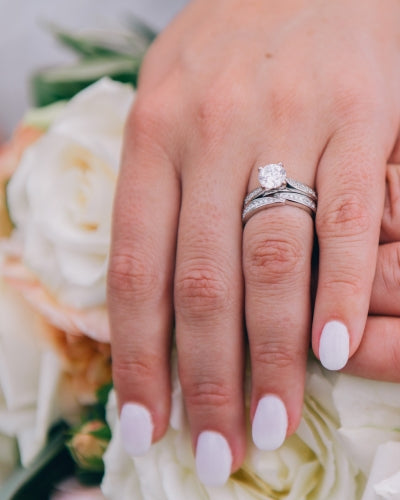
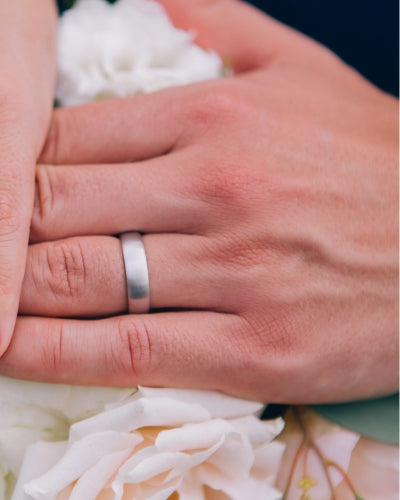
Wedding jewelry can incorporate royal-inspired elements through gold, engraving, geometric profiles, diamonds or family symbolism. The best approach is usually one that remains comfortable and meaningful beyond the wedding day.
Styling Rule: Royal-inspired men's jewelry works best when the jewelry feels intentional. Choose one visual focal point, coordinate metal tones, keep proportions balanced and allow the craftsmanship to remain visible.
How to Care for Royal-Inspired Jewelry
- Store jewelry separately to reduce scratching.
- Keep delicate pieces away from harsh chemicals.
- Remove rings during activities that could cause impact or abrasion.
- Clean jewelry according to the specific metal and gemstone requirements.
- Check settings periodically for loose stones.
- Keep jewelry dry when the material or finish requires it.
- Use professional inspection for valuable or heavily worn pieces.
Why Maintenance Matters
Historical royal jewelry survived because valuable objects were cared for, repaired and preserved. Modern heirloom jewelry deserves the same mindset. A ring purchased today can become tomorrow's family piece when it is maintained properly.
Historical Style Case Studies
Case Study 1: The Signet Ring
Historical idea: Identity and authentication.
Modern interpretation: A broad gold ring with engraved initials or a family-inspired symbol.
Best use: Everyday signature jewelry.
Key lesson: A simple design can have strong meaning when the surface carries personal symbolism.
Case Study 2: The Ceremonial Badge
Historical idea: Membership, honor and institutional identity.
Modern interpretation: A pendant or ring featuring a meaningful emblem.
Best use: Formal occasions or personalized jewelry.
Key lesson: Symbolism can make a piece more memorable than decoration alone.
Case Study 3: The Royal Gemstone Ring
Historical idea: Wealth, prestige and visual authority.
Modern interpretation: One distinctive gemstone surrounded by restrained metalwork.
Best use: Statement jewelry.
Key lesson: One strong gemstone can establish an entire design direction.
Case Study 4: The Family Heirloom
Historical idea: Continuity across generations.
Modern interpretation: A custom ring incorporating initials, dates or a meaningful gemstone.
Best use: Wedding, anniversary or milestone gift.
Key lesson: The emotional story of a piece can become part of its long-term value.
A Practical Jewelry-Selection Perspective
In practical jewelry selection, one of the most useful lessons from historical royal pieces is the importance of proportion. A gemstone that looks impressive in isolation can appear unbalanced when placed in an unsuitable setting. Conversely, a relatively modest gemstone can look exceptionally refined when the band, setting and proportions are carefully designed.
Another practical consideration is comfort. Men's jewelry is often worn for long periods, so the historical idea of visual authority should not override modern wearability. A royal-inspired ring should feel like a piece of jewelry rather than a costume accessory.
Customization is also valuable when creating a modern heirloom. Instead of reproducing an historical object exactly, a designer can preserve the underlying ideas—heritage, symbolism, craftsmanship and individuality—while creating a piece that fits the wearer's hand and lifestyle.
Pros and Cons of Royal-Inspired Men's Jewelry
| Advantages | Considerations |
|---|---|
| Strong historical character | Elaborate designs may not suit every wardrobe |
| Excellent for heirloom jewelry | Large rings require careful proportion |
| Many customization possibilities | Symbolic details should have personal meaning |
| Works with formal clothing | Some ceremonial styles may be impractical for daily wear |
| Can combine tradition with modern design | Historical reproduction requires attention to authenticity |
Common Mistakes to Avoid
Mistake 1: Choosing Size Over Design
A larger gemstone is not automatically more elegant. Proportion, setting and craftsmanship are equally important.
Mistake 2: Mixing Too Many Statement Pieces
Multiple large rings, chains and bracelets can compete visually. A single focal piece often creates a cleaner luxury appearance.
Mistake 3: Ignoring Comfort
A ring should be comfortable enough for its intended use. High settings and very wide bands may require more consideration for everyday wear.
Mistake 4: Copying Historical Jewelry Too Literally
Historical jewelry was designed for historical clothing and social environments. Modern royal-inspired jewelry usually works better when it takes inspiration from history rather than reproducing every detail.
Mistake 5: Forgetting Personal Meaning
The strongest modern heirlooms often have a story. Consider initials, dates, family symbols, birthstones or other meaningful details.
Royal Men's Jewelry History at a Glance
Infographic timeline showing the history of royal jewelry for European men from medieval kings to modern royalty
Medieval era: Rings, seals, religious symbols and status jewelry.
Renaissance: Elaborate court jewelry, gemstones and artistic metalwork.
Tudor era: Bold rings, chains, badges and formal royal adornment.
Seventeenth and eighteenth centuries: Court jewelry, orders, medals and elaborate accessories.
Nineteenth century: Heirloom culture and increasingly accessible luxury jewelry.
Modern era: Refined signet rings, wedding bands, gemstone jewelry and personalized royal-inspired designs.
Creating a Modern Royal-Inspired Custom Ring
A custom ring provides an opportunity to combine historical inspiration with personal identity.
- Start with the story. Decide what the ring should represent.
- Select the central design. This might be a gemstone, crest, engraving or geometric motif.
- Choose the metal. Yellow, white or rose gold can completely change the character.
- Determine proportions. Consider finger size and intended use.
- Choose the setting. Select a structure appropriate for the gemstone and lifestyle.
- Add personalization. Consider engraving or symbolic details.
- Review the design. Examine the relationship between stone, band and setting.
- Confirm specifications. Verify stone type, metal, dimensions and sizing before production.
Exploring Men's and Heritage-Inspired Jewelry
For shoppers interested in translating the history of European royal jewelry into contemporary pieces, a useful starting point is to compare metal colors, diamond shapes, settings and band profiles. A modern collection can incorporate historical ideas without becoming overly formal.
Men's wedding bands, gold diamond rings and distinctive gemstone designs can all provide a foundation for a royal-inspired jewelry wardrobe.
The Lasting Legacy of Royal Jewelry for European Men
The history of royal jewelry for European men is ultimately a story about meaning. Medieval rings could represent authority or identity. Renaissance jewelry demonstrated artistic sophistication. Royal orders communicated institutional belonging. Gemstones represented rarity and prestige. Family jewels carried memories from one generation to another.
Modern men can draw from all of these traditions without attempting to recreate a royal court wardrobe. The most successful contemporary interpretation usually combines historical inspiration with practical design, personal symbolism and refined craftsmanship.
A signet ring can carry initials. A diamond band can commemorate a marriage. A colored gemstone can become a signature. A custom ring can preserve a family story. Gold can connect contemporary design with centuries of European jewelry tradition.
That is the enduring appeal of royal-inspired men's jewelry: the object may be modern, but the language of craftsmanship, identity, heritage and symbolism is timeless.
Final Takeaway: From medieval kings to modern royalty, men's royal jewelry has evolved from symbols of authority and ceremony into sophisticated expressions of identity and heritage. When choosing a contemporary piece, focus on proportion, craftsmanship, material quality, symbolism and wearability. The result can feel luxurious without becoming excessive—and traditional without looking outdated.
Frequently Asked Questions About the History of Royal Jewelry for European Men
1. What is royal jewelry for European men?
Royal jewelry for European men refers to jewelry associated with European monarchs, royal courts, aristocratic traditions and ceremonial dress. It includes signet rings, gemstone rings, badges, collars, medals, chains, pendants, brooches and other valuable accessories.
2. What jewelry did medieval European kings wear?
Medieval kings could wear rings, signet-style rings, brooches, chains, pendants and ceremonial ornaments. Rings were particularly important because they could combine decoration with identity and sealing functions.
3. Why were signet rings important to European kings?
Signet rings provided a compact way to display an identifying design and could be associated with seals. Their engraved faces also made them natural symbols of family, identity and authority.
4. What gemstones were popular in royal men's jewelry?
Diamonds, rubies, sapphires, emeralds and pearls have all played important roles in European luxury jewelry traditions. Gemstone choices could reflect color preference, availability, rarity, symbolism and wealth.
5. Why is gold associated with royal jewelry?
Gold has long been valued for its distinctive appearance, durability and workability. Its visual warmth and historical association with wealth make it particularly suitable for heritage-inspired men's jewelry.
6. Are royal-inspired rings suitable for everyday wear?
Yes, provided the design is selected for comfort and lifestyle. A relatively simple signet, gold band or low-profile gemstone ring can be easier to wear daily than a highly elaborate ceremonial design.
7. What is the difference between a royal ring and a royal-inspired ring?
A historical royal ring has a documented connection to a royal person, dynasty or ceremony. A royal-inspired ring takes visual or symbolic inspiration from royal jewelry without claiming historical ownership or provenance.
8. What is the best metal for a royal-inspired men's ring?
There is no universal answer. Yellow gold provides the strongest traditional appearance, white gold offers a cooler contemporary look, and rose gold provides a warmer modern interpretation. The best option depends on personal style and the design.
9. What diamond shapes work well for royal-inspired men's rings?
Round, emerald, oval, cushion and geometric shapes can all work. Round shapes feel classic, emerald cuts look architectural, oval shapes create an elongated appearance, and geometric shapes can create a more contemporary statement.
10. Can men's wedding bands have a royal-inspired design?
Yes. A men's wedding band can incorporate royal-inspired elements through gold, engraving, heraldic motifs, diamonds, architectural profiles or distinctive gemstone details while remaining practical for everyday wear.
11. How can I make a men's ring look luxurious without making it oversized?
Focus on proportion, finishing, metal quality, gemstone placement and clean design. A well-balanced ring with a carefully selected gemstone can look more refined than an oversized piece with too many competing details.
12. Can a royal-inspired ring become a family heirloom?
Yes. A ring can become an heirloom when it is made from suitable materials, cared for properly and connected to a meaningful family story. Engraving initials, dates or symbols can strengthen its personal significance.
13. What is heraldic jewelry?
Heraldic jewelry uses symbols associated with family identity, coats of arms, crests, initials, shields or other identifying motifs. Modern jewelry can reinterpret these elements in simplified forms.
14. How should royal-inspired men's jewelry be styled?
Start with one focal piece. A substantial ring can be paired with a tailored suit, while a simpler signet or band can work with everyday clothing. Coordinating metal colors and maintaining balanced proportions usually creates the most polished result.
15. How do I care for a royal-inspired men's ring?
Store it separately from harder jewelry, avoid unnecessary impacts and harsh chemicals, clean it according to its specific materials, and periodically inspect the gemstone setting for signs of wear or looseness.
Related Jewelry Inspiration
Continue exploring historical and contemporary jewelry ideas through these internal resources:
- Gold Diamond Rings
- Men's Wedding Bands
- Diamond Jewelry Collections
- All Jewelry Collections
- Diamond Ring Settings Guide
- Salt and Pepper Diamond Bezel Ring Guide
Discover Your Own Royal Jewelry Story
Royal jewelry began as a language of authority, identity and ceremony. Today, that language can become deeply personal. Whether you prefer a classic gold signet, a distinctive diamond band, a gemstone statement ring or a custom heirloom, the most meaningful piece is one that connects craftsmanship with your own story.
Explore refined men's jewelry and heritage-inspired designs to find a piece that feels timeless, personal and unmistakably yours.
Explore the Collection


Dejar un comentario
Este sitio está protegido por hCaptcha y se aplican la Política de privacidad de hCaptcha y los Términos del servicio.