This guide covers styles, sizing, buying checklists, comparisons, step-by-step customization, care, real-life case studies, and FAQs.
1. Why Pears Are Trending in 2025
Pear-shaped engagement rings have surged in popularity due to their unique blend of classic brilliance and contemporary silhouette. The cut's versatility — from vintage-inspired settings to minimal modern solitaires — makes it attractive to brides seeking a statement that’s both elegant and wearable.
Trend drivers
Elongation effect: Pears create a lengthening illusion for fingers and faces.
Versatility: Works beautifully in solitaire, halo, and three-stone settings.
Customization: Wide range of girdle shapes, culet choices and faceting options.
Sustainability & alternatives: Demand for lab-grown and ethically sourced pear diamonds is rising.
Designer note: Pairing a pointed bow of the pear toward the wearer’s fingertip creates the most flattering elongation — an easy tip used by custom setters in 2025.
2. Anatomy of a Pear Cut — What Every Buyer Must Know
Key terms
Tip/Point: The sharp end of the pear — must be protected by prongs or bezel to prevent chipping.
Rounded end (base): The fuller, round side providing the 'brilliance anchor'.
Length-to-width ratio (L/W): The single most important proportion — influences elegance and perceived size.
Bow-tie effect: A shadow that can appear across the center — often minimized through good faceting.
Ideal proportion guidance
Common L/W ratios: 1.45–1.75. Narrower pears (higher ratio) look more elongated; wider pears (lower ratio) read larger face-up.
3. Popular Styles & Settings for Pear-Shaped Diamonds
Solitaire pear
Clean, minimal and utterly timeless. Best for showcasing a stellar center stone.
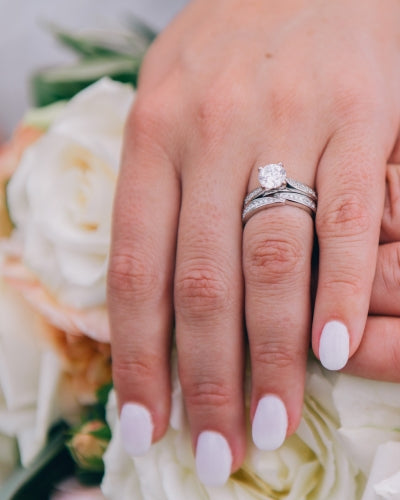
Pear-shaped solitaire engagement ring on hand
Halo pear
Halo settings add perceived size and sparkle — especially useful for wider pears.
East-West pears
Laid on their side for a modern, fashion-forward look.
Three-stone pear
Pears paired with tapered baguettes or trilliant side stones form cinematic rings with excellent profile balance.
Bezel & protective settings
Bezel or partial-bezel settings protect the point — recommended for active wearers.
4. Face & Hand Flattering Guide — How to Choose the Right Pear
Which pear for your hand shape
Short fingers: Longer L/W (1.6–1.75) for elongation.
Long slender fingers: Balanced L/W (1.45–1.6) looks harmonious.
Wide hands: Slightly wider pears with halo to balance proportions.
Which pear for your face shape
Round face: Elongated pears create an elegant contrast.
Oval face: Many proportions work; choose based on finger size.
Heart-shaped face: Soften the silhouette with a halo or rounded setting.
Styling tip
Rotate the pear tip away from the knuckle for a slimming look; tip toward the fingertip for more elongation.
5. Step-by-Step Buying Guide: From Budget to Final Approval
Step 1 — Set a realistic budget
Decide total spend including ring setting and insurance.
Remember: pears often show more face-up area for less total carat weight compared to rounds.
Step 2 — Decide natural vs lab-grown
Both options are available in pear shapes; lab-grown can offer savings and ethical peace of mind.
Step 3 — Choose preferred L/W ratio and clarity
1.45–1.75 L/W is standard. Aim for VS2–SI1 clarity if budget-conscious and careful about bow-tie.
Step 4 — Inspect for bow-tie and light return
Ask for multiple angle photos or videos, or request an in-person viewing.
Step 5 — Select setting and metal
Platinum for durability; 14K/18K gold for warmth and cost differences.
Step 6 — Protect the tip
Choose 4-prong settings with a protective prong at the tip or a bezel wrap.
Step 7 — Get certification & warranty
Request a laboratory certificate (GIA, IGI or equivalent) and full warranty details.
Checklist PDF: download your inspection checklist after you choose — bookmark the ring page and compare diamonds side-by-side.
6. Comparison Charts — Pear vs Other Popular Cuts
Quick comparison table
Feature
Pear
Round
Oval
Face-up size
Large for carat
Standard
Large for carat
Shows finger elongation
Yes
No
Yes
Vulnerability of tip
Requires protection
Low
Low
Bow-tie severity by shape
Bow-tie issues are most commonly encountered and noticed on elongated pears and can be controlled by cut quality and masterful faceting.
7. Case Studies — Real Couples, Real Choices
Case Study A — The Minimalist Bride
Profile: Architect, slender hands, prefers minimal jewelry. Choice: 1.25ct pear, 1.6 L/W, solitaire in 18K white gold with bezel tip protect. Result: Timeless, low-profile — wore daily for 3+ years with minor re-polishing.
Case Study B — The Vintage Lover
Profile: Fashion editor, 2.0mm slender fingers. Choice: 1.8ct pear, halo pavé, filigree gallery in platinum. Result: High visual impact, reports frequent compliments; used insurance after slight prong wear.
Each case highlights the need for a protective setting and realistic maintenance budgeting.
8. Customization & Commissioning — Step-by-Step
Step-by-step customization checklist
Pick center stone (carat, cut, clarity, color, L/W ratio).
Choose metal & setting style.
Decide on side stones (if any) and their orientations.
Request CAD render and 360° video.
Approve final timeline and deposit.
Budgeting & timeline
Custom pear commissions typically take 4–8 weeks depending on stone sourcing and engraving complexity.
Ready to customize? Start from a selection of pear prototypes: Start custom design.
9. Care, Insurance & Maintenance
Routine care
Weekly gentle cleaning in warm soapy water, soft brush.
Avoid rough activities without ring protection.
Inspect prongs every 6–12 months.
Insurance & appraisals
Get an independent appraisal and insure for replacement value — particularly important for heirloom-quality pears.
Repairs
Tip repairs or repointing should be performed by an experienced jeweler — always keep manufacturing certificates.
10. Tables, Charts & Quick Reference
Quick spec cheat sheet
Common L/W
1.45 — 1.75
Recommended clarity
VS2 — SI1
Common settings
Solitaire, halo, three-stone, bezel
Comparison Chart — Protection vs Style
Bezel: Maximum protection, modern look.
Prong (4): Classic, least metal coverage.
V-prong: Balance of protection and light entry.
11. Pros & Cons
Pros
Visually elongates fingers.
Unique, elegant silhouette.
Great face-up size for carat weight.
Cons
Tip vulnerability — needs protection.
Bow-tie risks if cut poorly.
Symmetry sensitivity — off-center cutters show immediately.
12. Infographic & Image Placeholders
Below are ready-made placeholders for editorial assets and infographics. Replace with final assets when ready.
pear proportions and L/W ratios
13. Calls to Action
Ready to shop or customize your pear-shaped ring?
Complimentary CAD render for first-time pear commissions — see product pages for current offers.
14. Frequently Asked Questions (FAQ)
1. Are pear-shaped diamonds good for everyday wear?
Yes — with the right setting (V-prong or bezel) and regular maintenance. Protect the tip and inspect prongs periodically.
2. What L/W ratio should I choose?
1.45–1.75 is the typical range. Choose higher L/W for elongation and lower for a fuller look.
3. Can I get a pear-shaped stone in lab-grown diamonds?
Yes — lab-grown options are widely available and often more budget-friendly while matching optical properties of natural diamonds.
4. How do I prevent the bow-tie effect?
Choose a well-cut stone from a reputable cutter and inspect light performance. Sometimes a slight change in setting angle reduces the bow-tie.
5. Is there a 'best' setting for pears?
V-prong or partial bezel settings are preferred to protect the point; halo settings are ideal for those seeking more presence.
6. How do I size a ring with a pear without changing its balance?
Have the jeweler size while preserving the rail structure; avoid excessive cutting of the band near the shoulders to maintain proportion.
7. Do pears show color more than rounds?
Pear shapes can show body color slightly more than rounds depending on faceting; choose color grade based on budget and setting metal (warmer metals mask lower color grades).
8. What side stones pair best with pears?
Tapered baguettes, trilliants, and small pears (in mirrored pairs) create elegant compositions.
9. Can pear rings be resized?
Yes — most rings can be resized 1–2 sizes without issue. Complex settings or infinite pavé requires jeweler consultation.
10. Do pears make fingers look shorter?
No — pears typically elongate the fingers. Orientation and L/W ratio determine the degree of elongation.
15. Final Thoughts — Why 2025 Is the Year of the Pear
Pear-shaped engagement rings unite romance and modernity. They offer visual elegance, flattering proportions, and high customization potential. Whether you choose classic solitaire, delicate halo, or trend-forward east-west styles, a pear cut delivers personality and presence that reads equally well for everyday wear and formal moments.



Leave a comment
This site is protected by hCaptcha and the hCaptcha Privacy Policy and Terms of Service apply.