Men’s Wedding Bands: How to Choose the Perfect Width, Fit & Finish
TL;DR
Width: 4–6 mm suits slim fingers; 7–9 mm or wider for bold looks. Comfort vs standard fit changes feel.
Fit: Comfort-fit rings feel slightly looser; choose one size up for widths >6 mm. Professional sizing recommended.
Finish & metal: Polished, matte, hammered, brushed — choose based on lifestyle and scratch tolerance. Metals: gold (14K/18K), palladium, platinum, tungsten.
Shop curated men's bands and finish options at FancyDiamondJewels for ready designs and customization.
1. Why band width matters — more than looks
Width affects comfort, proportion and how the ring sits next to an engagement ring or other jewelry. A narrow band reads delicate; a wider band reads bold and masculine. Wider bands also cover more of the finger, which can alter perceived finger length and proportion.
Design & proportion
Think of band width like frame thickness on a painting — it changes the visual weight. A 4 mm band can look elegant and subtle on most hands; 8–10 mm becomes a design statement and requires more careful sizing.
2. Understanding fit: comfort-fit vs standard-fit
Comfort-fit rings have a slightly rounded interior. They glide on more easily and feel roomier despite the same outer dimensions. Standard-fit rings have a flat interior and sit snugly.
Practical rule: With comfort-fit, some wearers prefer the same size as their measured finger; with wider bands (over 6 mm) you may need to go up ½ size. Always verify with professional tools or the site's Ring Size Finder where available.
3. How to measure ring size properly (step-by-step)
Materials
Soft measuring tape or string
Ruler (mm)
Marker
Steps
Wrap the tape or string around the base of the finger, where the ring will sit.
Mark the overlap, measure the length in millimeters.
Use a ring size chart (mm circumference → US/UK sizes) or the site's ring size tool. FancyDiamondJewels offers a ring size finder tool for convenience.
Measure at the end of the day and on a warm day; avoid measuring when cold or after heavy exercise.
Quick tip: If you're choosing a wide band (≥7 mm), consider choosing ½ size larger than your measured size for comfort.
4. Metals & finishes — choose for life & lifestyle
Popular metals for men's bands
Metal
Pros
Cons
Best for
14K / 18K Gold (Yellow, White, Rose)
Classic look, easy to resize, warm tone (yellow/rose); white gold is modern.
Softer than platinum; white gold may need rhodium replating over time.
Traditional, dressy
Platinum
Extremely durable, hypoallergenic, ages with a patina.
Higher cost, can scratch (but holds metal rather than losing it).
Luxury, everyday wear
Tungsten / Cobalt / Titanium
Very scratch-resistant, modern look, affordable.
Often cannot be resized; brittle under extreme force (tungsten).
Active lifestyles, contemporary style
Finish types (how they affect wear and look)
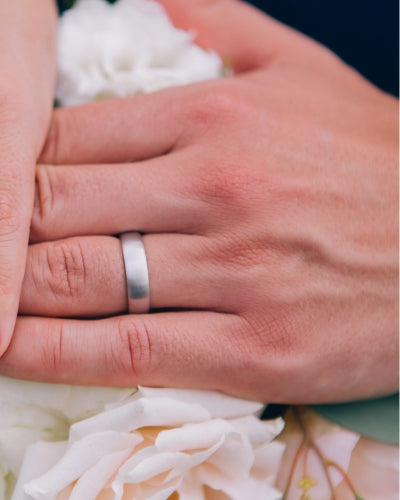
High-polish: Bright, reflective finish — shows scratches more easily but polishes beautifully.
Brushed / Satin: Softer sheen, hides small scratches well.
Matte / Sandblasted: Contemporary, rugged look; great for concealing wear.
Hammered: Textured, handcrafted appearance — unique and forgiving for daily wear.
5. Width guide — choose by finger type & style
Below is a practical width guide that pairs finger proportions and style goals with recommended band widths.
Finger type
Recommended width
Why
Slim / long fingers
3–5 mm
Keeps proportion delicate and elegant.
Average build
5–7 mm
Balanced look for everyday wear.
Broad / strong hands
8–10 mm+
Good visual anchor on larger hands.
6. Step-by-step: How to choose the perfect men's wedding band
Step 1 — Set a style baseline
Decide whether you want classic, modern, or rugged. Look through a curated collection (example: FancyDiamondJewels men's band collection).
Step 2 — Pick a metal and finish
Balance aesthetics and durability: platinum for longevity, gold for tradition, tungsten/titanium for scratch-resistance.
Step 3 — Choose width based on finger and lifestyle
Use the width guide above. If unsure, 5–6 mm is the most universally flattering for men.
Step 4 — Select fit & confirm size
Select comfort-fit for all-day wear or standard-fit for a snug feel; verify with professional sizing or the site's ring size finder.
Step 5 — Check customization & resize policies
Confirm whether the ring can be resized. FancyDiamondJewels lists resizing and policies on product pages and support tools like "Resizing Policy".
Step 6 — Order and inspect on arrival
Inspect fit, finish and any hallmark / metal stamp. Keep packaging and paperwork for warranty or resizing.
7. Quick comparison: comfort-fit vs standard-fit vs alternative materials
Type
Feel
Resizing
Best for
Comfort-fit (gold/platinum)
Rounded interior, roomier
Yes
Daily wearers
Standard-fit
Flat interior, snug
Yes
Formal looks
Tungsten / Cobalt
Heavy & solid
Rarely (depends)
Scratch-resistant modern look
8. Case studies — real decisions, real outcomes (E-E-A-T: experience-driven)
Case study A — The commuter who needed durability
Background: Software engineer, active commute, hands exposed to tools and machinery. Choice: Satin-finish tungsten band (8 mm). Outcome: Low visible wear, happy with low-maintenance finish. Note: Could not resize — initial sizing required care.
Case study B — The groom who wanted classic elegance
Background: Architect, prefers traditional look. Choice: 14K white gold, 6 mm, comfort-fit, polished finish with inner engraving. Outcome: Comfortable daily wear and simpler resizing later via jeweler; polish required occasional re-rhodium for white gold.
Takeaway: Lifestyle and resize expectations should weigh heavily in the decision.
9. Shop-ready examples (curated from FancyDiamondJewels)
Below are representative product pages and collection links you can use to view designs and specs directly:
Infographic: how to choose ring width, fit and finish
10. Care, maintenance & resizing — what to expect
Care by metal
Gold: Polishing restores shine; white gold may need rhodium replating every few years.
Platinum: Patinas but can be polished; scratches displace metal rather than removing it.
Tungsten/Cobalt: Highly scratch-resistant — use soft cloth; brittle under sharp impact.
Resizing notes
Gold and platinum rings are the easiest to resize. Tungsten and some cobalt alloys are frequently non-resizable. Confirm product pages' resize policy (FancyDiamondJewels includes a Resize Policy on support pages).
Production-ready placeholders (replace with branded WebP assets on publish):
Ring width chart — 3mm to 10mm visual guide
Comfort-fit vs standard-fit interior cross-section
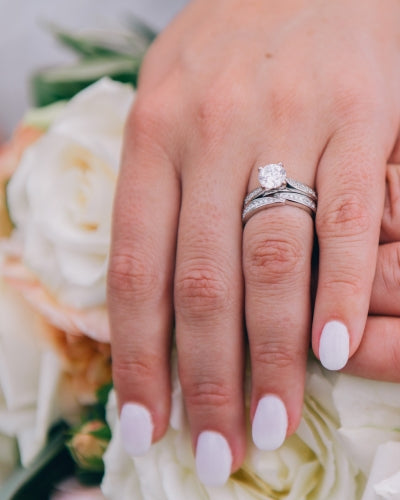
13. Examples: pairing a wedding band with an engagement ring
For men who also wear an engagement or dress ring, consider the following pairings:
Thin engagement band + 5mm polished band = balanced, low-profile look.
Two heavy bands (e.g., 8–10 mm each) can feel bulky — opt for tapered or mixed finishes.
Contrast metal tones for visual separation (e.g., yellow gold band with white gold engagement ring).
14. Budget planning — where to invest
Decide whether the metal or the finish matters more to you. If daily durability is key, invest in platinum or high-quality tungsten. If long-term classic look is the priority, a 14K/18K gold comfort-fit band is an excellent investment.
15. Engraving, personalization & inside messages
Inside engraving is a low-cost personalization that preserves the exterior look. Confirm character limits and font preview on the product page when ordering.
16. Returns, warranties & support
Before purchase, check the store's return & warranty information. FancyDiamondJewels provides policy links such as "Return and Refund Policy" and "Resize Policy" in their site navigation.
17. Accessibility & comfort considerations
If you have conditions that affect finger size (arthritis, swelling), choose comfort-fit and consult a jeweler for medical-friendly designs.
18. Sustainability & lab-grown diamonds in men's bands
Lab-grown diamonds are used in many men's bands with subtle channel or prong settings for understated sparkle. FancyDiamondJewels highlights lab-grown options in their engagement & wedding rings blog and product listings.
19. Pre-checkout checklist
Confirm your final ring size (consider width).
Confirm metal and finish selections.
Check resize options and warranty.
Confirm engraving, if any.
Keep product SKU and paperwork on delivery.
20. Ready to choose? Shop curated men's bands
Browse a curated selection of men's wedding bands and filter by width, metal, and finish on the FancyDiamondJewels men's collection.
FAQs — Your questions answered
How wide should a men’s wedding band be?
Most men choose 5–6 mm for an everyday, balanced look. Narrow (3–4 mm) is subtle; wide (8–10 mm) makes a bold statement.
What is comfort-fit and should I choose it?
Comfort-fit rings have a rounded interior for a smoother fit — great for daily wear, especially for wider bands.
Can men’s bands be resized?
Gold and platinum rings are typically resizable. Tungsten and some modern alloys are often non-resizable — check the product page for details. :contentReference[oaicite:13]{index=13}
Which metal is best for an everyday band?
Platinum for durability (and hypoallergenic properties) or 14K gold for traditional looks and easier resizing.
Does finish affect longevity?
Yes. Brushed and matte finishes hide small scratches better than high-polish finishes.
Should I size up for a wide band?
Often yes — for widths >6 mm, ½ size up is a common recommendation for comfort.
Are lab-grown diamonds used in men's bands?
Yes — they are commonly used for subtle channel or pavé settings in men's bands for sustainable sparkle. See FancyDiamondJewels' lab-grown diamond ring listings. :contentReference[oaicite:14]{index=14}
How to pair a wedding band with an engagement ring?
Match widths or choose contrasting finishes for separation; a 6 mm band often pairs well with most engagement rings.
What should I do if my finger size fluctuates?
Choose a comfort-fit and avoid sizing during extremes of temperature or activity; consult a jeweler for options like slightly flexible bands or adjustable solutions.
Where can I buy curated men's wedding bands?
FancyDiamondJewels' men's wedding band collection is curated with multiple width, finish and metal options. :contentReference[oaicite:15]{index=15}



Leave a comment
This site is protected by hCaptcha and the hCaptcha Privacy Policy and Terms of Service apply.