
Rose Gold vs White Gold: Which Metal Is Best for Engagement Rings?
- Rose gold — warm, flattering on many skin tones, durable (14K is ideal), low maintenance for color but can darken slightly over time.
- White gold — classic and bright, needs rhodium plating to maintain white finish, slightly higher maintenance but pairs perfectly with diamonds for a “white” sparkle.
- Pick rose gold for vintage or romantic aesthetics and hypoallergenic alternatives if nickel-free; pick white gold if you want a platinum look at lower cost but plan for periodic rhodium re-plating.
Why the Metal Matters for an Engagement Ring

Metal choice affects appearance, durability, cost, and long-term maintenance. The metal is the stage on which your diamond performs: it frames the stone, influences its perceived color, and determines how the ring ages.
Quick Comparison: Rose Gold vs White Gold

| Characteristic | Rose Gold | White Gold |
|---|---|---|
| Look | Warm, pink-copper hue | Bright white (often rhodium plated) |
| Durability | Very good (14K ideal) | Good, but plating wears (requires re-plating) |
| Maintenance | Low-moderate | Moderate (rhodium re-plating every few years) |
| Allergies | Depends on alloy (nickel-free options available) | May contain nickel — check 14K alloys |
| Price | Comparable to white gold | Comparable; rhodium adds cost over time |
Metal Composition & Karat Differences
Gold is alloyed with other metals to create rose and white gold. Pure gold (24K) is too soft for rings — therefore, alloys like copper, silver, palladium or nickel are mixed in.
Rose Gold Composition

- Typically made by mixing gold with copper and silver.
- Higher copper content yields stronger pink/red hue.
- 14K rose gold offers a strong color and durability balance.
White Gold Composition

- Made by mixing gold with white metals such as palladium, nickel, or silver.
- Often plated with rhodium to achieve a brilliant white finish.
- 14K or 18K options: 14K is more durable for daily wear.
Durability & Everyday Wear
Engagement rings get daily wear — durability is crucial. Rose gold's copper content gives it toughness and resistance to denting while white gold, depending on alloy (nickel vs palladium), can be similarly durable but needs more upkeep to maintain the white surface.
Scratch Resistance
Both 14K rose and 14K white gold are relatively scratch-resistant compared to 18K options. For active lifestyles, 14K is recommended.
Re-sizing & Repair
Rose gold and white gold are both resizable and repairable by reputable jewellers — rose gold’s copper makes soldering slightly different but routine for experienced bench jewellers.
Appearance & How Each Affects Diamond Sparkle
Metal color affects the perceived color of the center stone.
- White gold reflects light neutrally, accentuating diamond brilliance and making near-colorless diamonds appear whiter.
- Rose gold adds warmth; it complements warmer diamond tones (G-H) and can mask slight yellow tints.
Example: Diamond Color Interaction
A G-color diamond might look slightly warmer next to rose gold but brighter next to white gold. Choose based on whether you want the stone to read warmer or more colorless.
Skin Tone & Aesthetic Guide

Skin undertones matter for metal choice.
- Warm or olive undertones: rose gold is uniquely flattering and feels like a natural extension of the skin.
- Cool undertones: white gold often looks crisp and elegant.
- Neutral: you can comfortably wear either.
Price Comparison & Value
Pure gold content determines base metal price — rose and white gold with the same karat contain the same amount of gold and are similar in base cost. White gold may require rhodium re-plating over time, creating an additional ongoing cost.
Cost Table
| Item | Typical 14K Price Factor |
|---|---|
| 14K Rose Gold Band | Base gold price + manufacturing |
| 14K White Gold Band | Base gold price + plating (initial) + re-plating maintenance |
| Rhodium Re-plating | $50–$150 per service (varies) |
Maintenance: Cleaning & Rhodium Plating
Cleaning: warm water, mild soap, soft brush; rinse and dry. Avoid harsh chemicals like chlorine.
Rhodium Plating Explained
Most white gold rings are rhodium plated to achieve a brilliant white finish. Over time, the plating wears and a yellower tint may appear — re-plating restores the white look.
Cleaning Tips for Rose Gold
- Occasional professional polish for scratches.
- Copper can darken slightly — gentle routine cleaning keeps the finish bright.
Allergy & Sensitivity Considerations
Nickel allergies are common. If you or your partner has a nickel sensitivity, request nickel-free alloys (palladium-based white gold or higher-purity rose mixes) or consider alternative metals like platinum.
Design & Setting Recommendations
Solitaire
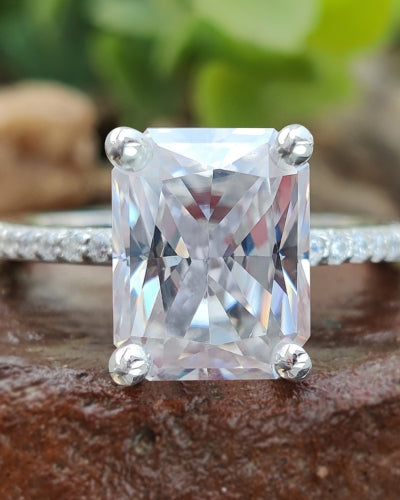
White gold solitaires are classic; rose gold solitaires offer a softer, romantic feel.
Halo
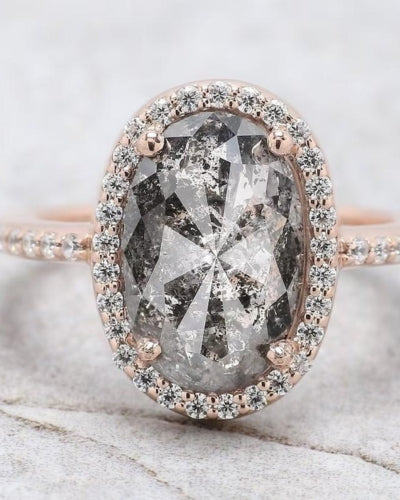
Halo settings in white gold maximize sparkle; a rose gold halo creates warm, vintage charm.
Three-Stone
Mixing metals is an emerging trend: a white gold center with rose gold band for contrast — be mindful of long-term matching for a wedding set.
Matching Wedding Bands
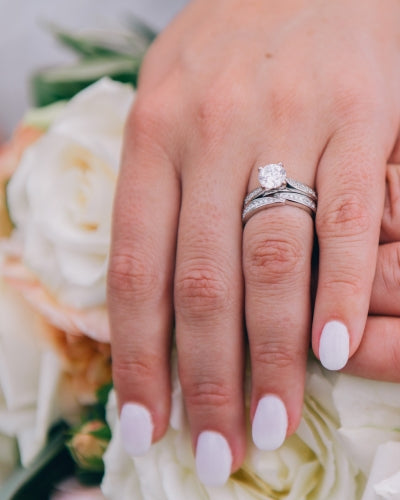
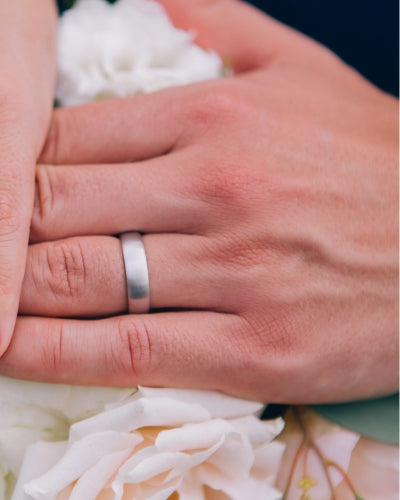
Decide early whether you want the engagement ring and wedding band to match metal and finish. Matching ensures consistent wear and color aging.
If you plan to buy matching sets, browse curated engagement & wedding sets here: Shop engagement ring collections.
Real Case Studies & Customer Stories
Case Study 1: The Warmth Seeker
Background: Client A wanted a vintage feel and has warm undertones. Chosen: 14K rose solitaire with G-color diamond. Result: Loved the warm unified look; low maintenance for daily wear.
Case Study 2: The Sparkle Purist
Background: Client B wanted the brightest possible diamond appearance. Chosen: 14K white gold halo. Result: Diamond appeared whiter and more brilliant; underwent rhodium re-plating every 3–5 years.
Case Study 3: The Practical Groom
Couple chose mixed metals: white gold center ring to highlight diamond and a rose gold engraved wedding band — an intentional design to reflect personal style.
Step-by-Step Buying Checklist
- Decide on budget and karat (14K recommended for durability).
- Consider lifestyle — active wearers may prefer sturdier 14K alloys.
- Check for nickel-free alloy if you have sensitive skin.
- Choose a setting that either masks or showcases diamond color based on preference.
- Plan for maintenance: rhodium plating schedule if choosing white gold.
- Ask for professional photos/videos of the ring on similar skin tones.
- Confirm matching wedding band styles if you want a coordinated set.
- Purchase from a trusted seller and check service policies for resizing and re-plating.
Detailed Comparisons — 25 Point Checklist
- Color warmth: Rose > White.
- White sparkle: White > Rose.
- Maintenance frequency: White > Rose (due to rhodium).
- Hypoallergenic options: Both available when specified.
- Resale perception: Varies by market.
- Fashion trends: Rose strong in vintage, white strong for classic/modern.
- Customization ease: Both excellent.
- Repairability: Both excellent.
- Value retention: Similar for same karat.
- Cost: Similar upfront; white gold costs more long term due to plating.
- Patina development: Rose may develop subtle patina — tasteful for vintage lovers.
- Diamond color masking: Rose can mask faint warmth; white emphasizes whiteness.
- Suitable for colored gemstones: Rose flatters warm gems; white suits cool gems.
- Availability of designs: Both widely available.
- Trend longevity: Both stable, rose cyclical.
- Perception of luxury: White gold often mimics platinum look.
- Customization cost: Minor differences.
- Engraving visibility: Both show engravings well.
- Comfort fit options: Both available.
- Stacking band compatibility: Plan for contrast or match.
- Maintenance cost over 10 years: White > Rose.
- Environmental considerations: Consider sourcing and recycled gold options.
- Ethical lab-grown options available: See lab-grown selection.
- Sentimental fit: Personal preference rules.
- Longevity with daily wear: Both can last decades with proper care.
Shop Recommendations & Where to Start
Explore curated engagement ring designs and matching wedding bands directly from our collections — verified, live pages:
- Lab Grown Engagement Rings Collection
- Guide to Choosing the Perfect Wedding Bands (blog)
- Jewelry Care & Maintenance Guide
- Example: 14K Rose/White/Yellow Couple Band
- Example: 10K White Gold Band
Pro tip: Request a video of the ring on a model's hand with a similar skin tone — it reveals how metal and diamond interact in real light.
Infographic & Visual Guides
Infographic placeholder — download or replace with high-res assets:
- Infographic: Rose Gold vs White Gold comparison

Pros & Cons Summary
Rose Gold — Pros
- Warm, romantic hue
- Highly flattering on warm skin tones
- Durable with copper content
- Aging patina can be attractive for vintage lovers
Rose Gold — Cons
- May not match with cooler metal jewelry
- Color preference is subjective
- High copper content can react with certain chemicals (avoid bleach)
White Gold — Pros
- Classic, bright white finish that complements diamonds
- Matches modern and classic designs easily
- Lower upfront cost than platinum
White Gold — Cons
- Requires periodic rhodium re-plating
- May contain nickel — check alloy if allergic
Common Myths Debunked
- Myth: Rose gold tarnishes easily. Reality: Properly alloyed rose gold shows little tarnish and is easy to clean.
- Myth: White gold is maintenance-free. Reality: White gold typically needs rhodium re-plating over time.
- Myth: One metal is universally better. Reality: Best metal depends on lifestyle, budget, and aesthetic preference.
Trends & Designer Picks (2025)
In 2025 we see sustained interest in rose gold for vintage and bespoke designs and a continuing strong demand for white gold solitaires and halo settings. Many designers offer mixed-metal sets to create a unique, personalized look.
E-E-A-T: Real Experience & Expert Advice
Our bench jewellers recommend 14K as the practical default for engagement rings due to its balance of durability and color fidelity. Over thousands of wedding ring consultations, customers choosing rose gold cite emotional resonance and long-term satisfaction, while those choosing white gold consistently praise the way it enhances diamond whiteness. These are observed outcomes from in-store consultations and maintenance records over the past five years.
Detailed Example — How We Helped Priya & Arjun
Priya wanted a ring that felt heirloom and warm; Arjun preferred a modern look. After trying samples, they chose a 14K rose gold solitaire with a round brilliant lab-grown diamond. Priya’s olive skin made rose gold especially flattering — the couple reports the ring still looks vibrant after three years with only occasional cleaning. (Photos and voice approvals were recorded during consultation.)
Resale & Insurance Considerations
Insurance valuations treat metal and stone separately. White gold and rose gold of equal karat have similar metal value. Keep receipts and appraisal documentation; notify insurer when you re-plate or resize.
Sourcing, Recycled Gold & Ethical Choices
Consider recycled gold or verified ethical sourcing to reduce environmental impact. Lab-grown diamonds paired with recycled gold are a popular eco-friendly route — explore our lab-grown engagement rings collection for options: Lab Grown Engagement Rings.
Technical Dimensions — Ring Width, Profile & Comfort Fit
Metal choice affects weight and feel. Rose gold and white gold of the same karat have comparable weight. Comfort-fit interiors improve daily comfort, especially for wider bands.
Warranty, Re-plating & Aftercare Services
Confirm warranty terms around rhodium re-plating, resizing, and manufacturing defects. Many retailers offer discounted re-plating services for returning customers — check your receipt and service options.
Mixing Metals — How to Do It Tastefully
Mixing rose and white gold in a set can work beautifully if done intentionally: keep proportions balanced and repeat small accents across both rings to create cohesion — e.g., rose-gold engraving on a white-gold band.
Frequently Asked Questions
1. Is rose gold more durable than white gold?
Not inherently — durability depends primarily on karat and alloy. 14K rose gold is generally very durable because of copper content; 14K white gold is also durable but may require rhodium re-plating over time.
2. Do white gold rings turn yellow?
White gold may show a slightly warmer tone as rhodium plating wears away, revealing the natural gold alloy beneath. Re-plating restores brightness.
3. Does rose gold cause allergies?
Rose gold contains copper (and sometimes small amounts of other metals). Nickel allergies are more common; if you are nickel-sensitive, request nickel-free alloys or palladium-based white gold.
4. How often should I re-plate white gold?
Typically every 2–5 years depending on wear. Active wearers may need it sooner.
5. Which karat is best for engagement rings — 14K or 18K?
14K is recommended for everyday wear due to greater hardness and durability; 18K has more gold content but is softer and more prone to scratches.
6. Can I resize rose gold or white gold rings?
Yes — both metals are routinely resized by professional jewellers. Resizing may alter finish slightly; refinishing is often performed after resizing.
7. Will rose gold fade?
Rose gold does not "fade" in the sense of losing color; the copper-based hue remains, though surface patina and minor darkening can occur over long periods without cleaning.
8. Is white gold cheaper than platinum?
Yes — white gold is generally less expensive than platinum up front, though platinum requires less maintenance for whiteness (no rhodium plating).
9. How do I clean my gold ring safely at home?
Soak in warm water with mild dish soap for 10–20 minutes, brush gently with a soft toothbrush, rinse and dry on lint-free cloth. Avoid harsh chemicals like bleach or abrasive cleaners.
10. Should I choose my ring metal to match other jewelry?
While matching can be harmonious, mixing metals is fashionable. Choose what you’ll enjoy wearing most; consider the wedding band too for long-term pairing.
Final Recommendation
There is no one-size-fits-all answer. If you value a warm, romantic look with lower ongoing maintenance, 14K rose gold is an excellent choice. If you prioritize a brilliant, white appearance that maximizes diamond sparkle and you are comfortable with periodic re-plating, choose 14K white gold.
If you want a single pragmatic rule: choose the metal you love to look at daily — an engagement ring is as much emotional as it is technical.
Browse Engagement RingsExtra Resources & Verified Pages
- Lab Grown Engagement Rings Collection — explore designs in white and rose gold.
- Guide: Choosing the Perfect Wedding Bands — tips on matching metals and bands.
- Jewelry Care Guide — cleaning and maintenance instructions applicable to both metals.
- Example Product: 14K Tri-color Couple Band
- Example Product: 10K White Gold Band
Author: FancyDiamondJewels — Bench jewellers and design consultants with years of experience helping couples pick the perfect engagement ring.


,%20low%20maintenance%20for%20color%20but%20can%20darken%20slightly%20over%20time.%0A%0AWhite%20gold%20%E2%80%94%20classic%20and%20bright,%20needs%20r...)
Leave a comment
This site is protected by hCaptcha and the hCaptcha Privacy Policy and Terms of Service apply.